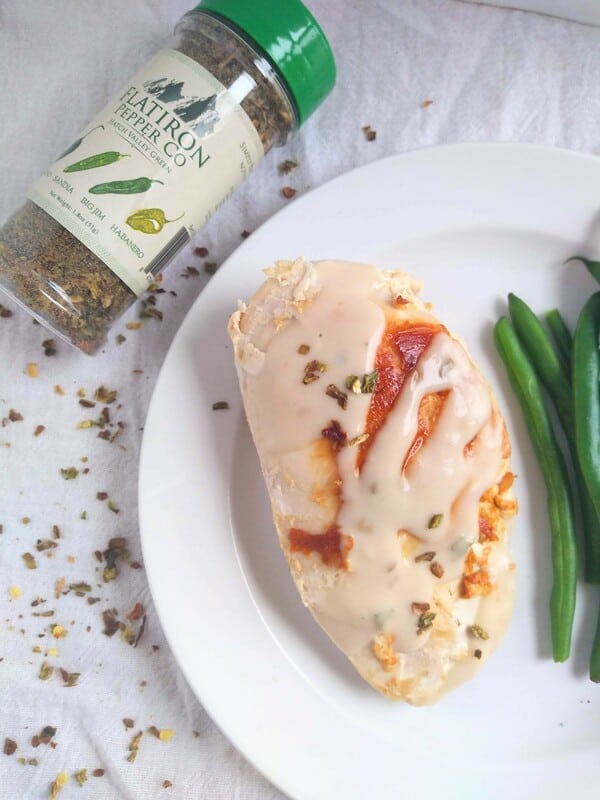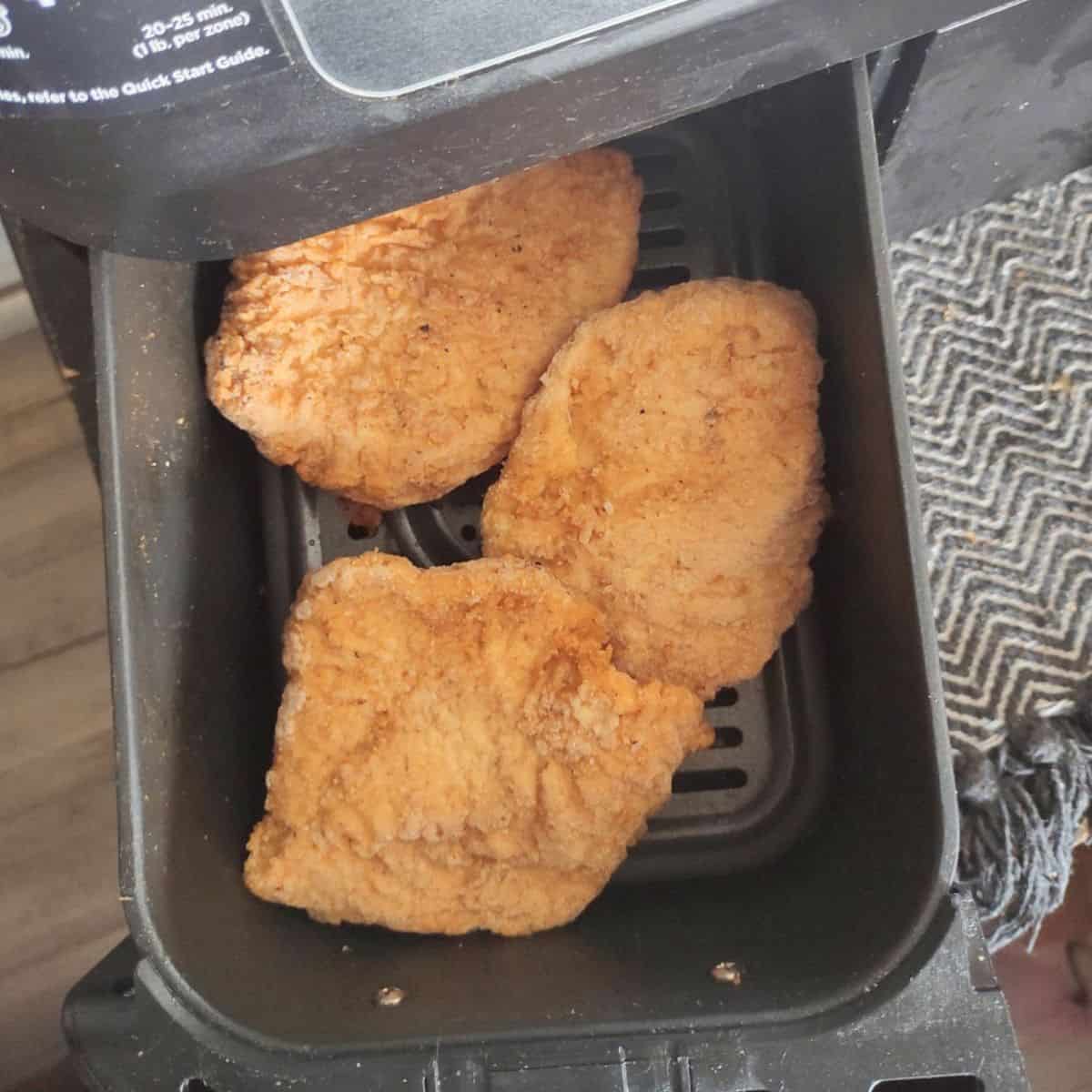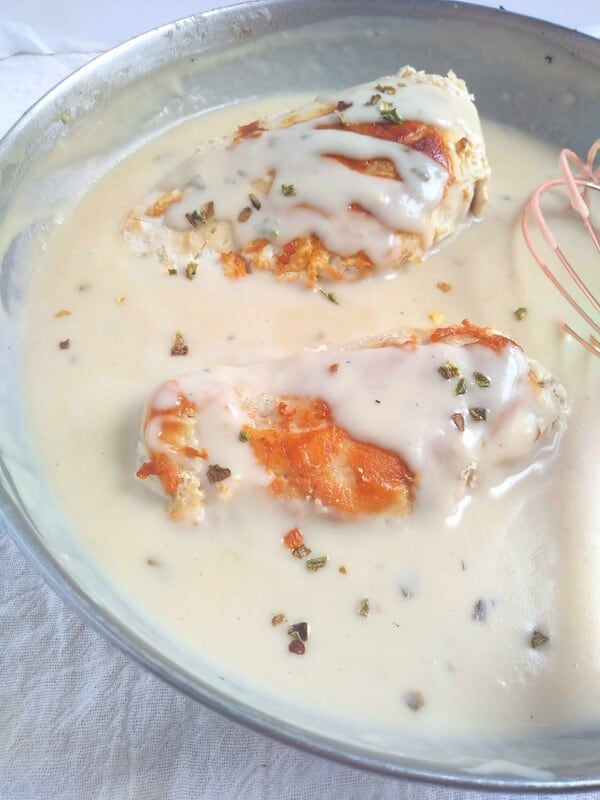
Roasted Bone-In Lemon Herb Chicken

After a recent juice fast we are looking to introduce meats back into our diet. We didn’t want something that was too fatty, so we opted for chicken breast. I could have bought boneless skinless chicken for over $5 a pound or pay $1.99 a pound for bone-in chicken with the skin. A no brainer there. I save money and get to keep the bones to make chicken stock down the road.

How to Roast Tender Juicy Chicken Breast
I was looking to avoid the fat. So the skin would have to go. The problem would then be how to keep the chicken moist without the skin on it and without using a marinade, which I didn’t really want to do this morning. I have a couple of tricks up my sleeve.

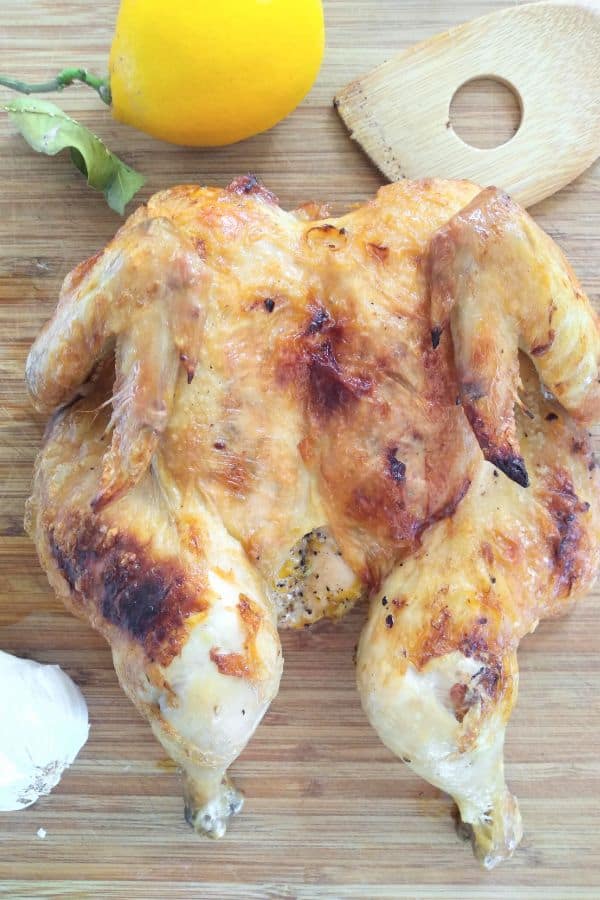
Roasted Bone-In Lemon Herb Chicken

1. The first one is a probe thermometer. But utilizing this piece of equipment I can track the chicken’s internal temperature pulling it out when it’s completely done. You want it to be at least 165 degrees but really no more than 180. Mine was still tender and juicy at 175.

2. Temperature control in the oven is important. Too high of a temperature I will burn the outside before the inside is done. Too low and the outside will be a pasty white. The key is to start at the standard 350 degrees. Then go up in temperature to brown the outside at the end. I cook the chicken until it reached 155 degrees. Then turned up the temperature to 415 degrees to brown the outside.

Roasted Bone-In Lemon Herb Chicken

3. Lemons! No only can they provide wonderful flavor for the chicken but the juice keeps it moist. I cut some lemons into slices and placed them right on top of the chicken, trying not to lose any of the juice in the process. Just let the lemons roast along with the chicken. If in season I opt for Meyer Lemons as they have the best flavor.

By following these tricks I was able to produce juicy chicken without the skin and in the oven. A victory indeed! Besides just using the chicken whole for a meal, you can slice it off the bone and cut into pieces that would make an excellent addition to your next chicken salad. Our toss the pieces in with your favorite rice medley and roasted asparagus. At this point the sky is the limit!

Bone-In Lemon Herb Roasted Chicken Breasts
 

Ingredients
  • 4 bone-in chicken breasts with the skin removed
  • 2 lemons, cut into slices
  • 1 tablespoon organic virgin coconut oil
  • 1 teaspoon fresh tarragon, chopped
  • 1 teaspoon fresh thyme, chopped
  • 1 teaspoon garlic powder
  • kosher salt and black pepper to taste

Instructions
  1. Remove the skin from the chicken breasts and discard. Place chicken into a baking dish.
  2. Brush on about 1 tablespoon of coconut oil onto the chicken breasts.
  3. Sprinkle with kosher salt and freshly ground black pepper. Add the garlic powder and herbs.
  4. Remove the ends of the lemons and cut into slices. Place 2-3 slices on top of each chicken breast.
  5. Cook in a 350 degree oven until the internal temperature reaches 155 degrees.
  6. Turn the oven up to 415 degrees, continue roasting until internal temperature is between 165-180 degrees.
  7. Allow 5 minutes to rest before cutting.


Favorite Chicken Recipes

Other Favorite Chicken Recipes

Clementine Glazed Boneless Skinless Chicken Thighs
White Chicken Salad with Giada’s Roasted Root Vegetable Vinaigrette
How to Make Homemade “Mall” Style Orange Chicken

Share

My kids can be picky when it comes to citrus (much like their dad). Sometimes I buy them a box of Clementines and they practically inhale the things. Other times they run from them like I was forcing vegetables down their throat. A recent box of Clementines was more than latter than the former. They were more on the tart side. In order not to let them go to waste, I decided to dust off my old Clementine Glazed Chicken Thigh recipe and give it another go around. I also wanted a chance to improve the awful photo I took the first time around. Here is said photo:

I am shocked (and embarassed) that anyone would have pinned this picture on Pinterest. Hopefully my photography has improved over the last couple years:

I would say that looks a little better! And for the record I served the chicken this time around with a mixture of short grain brown rice and tri-colored quinoa.

Clementine Glazed Chicken Thighs
 

Ingredients
For the glaze
  • 8-10 Clementines
  • 1 teaspoon Chinese Five Spice
  • 1 tablespoon orange blossom honey
  • zest of 3 Clementines
  • ½ teaspoon ground white pepper
  • ½ teaspoon kosher salt
For the chicken!
  • 6 boneless skinless chicken thighs (cut into bite sized pieces)
  • cooking oil (I like grape seed)
  • kosher salt

Instructions
To make the glaze
  1. Start by peeling 8-10 Clementines and place them into a blender or a container and use a stick blender.
  2. Place a sieve over a sauce pan and pour the mixture through it.
  3. Add remaining glaze ingredients
  4. Bring to a boil. Lower the heat to medium, so you don’t boil over.
  5. Stir frequently.
  6. Cook until the juice it has begun to thicken and is almost a syrup like consistency, but not quite.
  7. Taste the glaze. Add more seasonings if necessary.
To prepare the chicken
  1. Season with kosher salt. Then grab a large skillet or electric skillet, and place enough oil just to cover the bottom.
  2. Heat the skillet over medium high heat.
  3. When skillet is ready, place the chicken inside.
  4. Cook until the chicken pieces have browned all over and there is no pink in the middle.


Share

Have you ever been to a mall and had someone try to stuff a piece of orange chicken on a toothpick down your throat? Or have you ever found a box of leftover chicken in the back of your fridge from your take out order two weeks ago? Orange chicken has become a part of the American Asian cuisine. But often people resort to forking over their cash for someone else to make it. Is it usually tasty? Yes. But could it be better made at home? Oh yeah! Typically I find the orange chicken you enjoy at the mall, the crispy coating on the chicken has long since lost it’s crisp. Making it yourself you can bring the crisp back to this popular Asian inspired dish.

I found a recipe for orange chicken on the website, the Noshery. Whenever I look up a recipe, I always type in the word “blog” next to whatever I am searching with hopes of avoiding websites like cooks.com or allrecipes.com. I find it hard to find good recipes on those sites.

Here is the ingredient list taken form the Noshery below. I did make some changes: I opted for flour instead of corn starch in the batter. Go for a low protein flour, like cake flour for a more crisp coating. I also did not use the red pepper flakes or green onions called for in the sauce. I still included them in the list as optional ingredients.

How to Make Homemade “Mall” Style Orange Chicken
 

Ingredients
For the chicken
  • 2 lbs boneless skinless chicken breasts or thighs, cut into 1-1/2” cubes
  • 1 ½ cups low protein flour (cake flour)
  • 1 cup panko bread crumbs
  • 2 eggs, beaten
  • ¼ teaspoon salt
  • ¼ teaspoon pepper
  • Oil for frying (I used canola)
For the orange sauce
  • 1 ½ cups water
  • ¼ cup freshly squeezed orange juice (I used 1 Valencia orange)
  • ⅓ cup rice vinegar
  • 2 ½ tablespoons soy sauce
  • 1 tablespoon orange zest, grated
  • 1 cup packed light or dark brown sugar (I used dark)
  • ½ teaspoon ginger root, minced
  • ½ teaspoon garlic, minced
  • 2 tablespoons green onion, chopped (optional)
  • ¼ teaspoon red pepper flakes (optional)
To thicken the sauce
  • 3 tablespoons cornstarch
  • 2 tablespoons water

Instructions
To coat the chicken
  1. I like to use pie or cake pans whenever I coat chicken or seafood. I put flour (seasoned with salt and pepper) in one, the eggs in another, and the panko in the last one. The chicken goes into the flour first, then into the egg, and finally into the panko.
To fry the chicken
  1. Heat up your oil to 375 degrees. I like using a cast iron dutch oven to do my frying in. A handy deep fry thermometer will help you to maintain the proper temperature.
  2. Be careful not to add too much chicken at one time, or you will cool the oil down too much.
  3. Be patient, work in batches until all your chicken is golden brown. I like to keep my chicken warm by placing it in the oven set to the lowest possible setting.
To make the sauce
  1. Place the 1½ cups of water, orange juice, rice vinegar, and soy sauce into a sauce pan over medium heat. Give a good stir allow to cook for a few mintues – for the flavors to combine.
  2. Then add in the rest of the ingredients and bring to a boil.
  3. While this is going on stir the water and corn starch together.
  4. Stir slowly into the pan and cook until the mixture has thicken.

Notes
Serving Suggestions Serve the chicken over a bed of sushi rice along with broccoli or cooked bok choy. I recommend just keeping the sauce separate from the chicken and just serving it over the chicken when ready. That way leftover chicken will still have a chance at maintaining that crispiness.


Final Thoughts
I was very pleased with the way this turned out. At first I thought the 1/3 cup of rice vinegar was a lot but it worked perfectly with the sweetness of the brown sugar. Using freshly squeezed orange juice really made a difference. My wife agrees best orange chicken we ever had.

Share

I have been cooking a lot of whole chickens as of late. A local grocery store had a sale on several Saturdays in a row on whole chickens for $.69/lb. That was a deal I do not want to pass up, so I would always head off there and get my max allowed 2 chickens. I would usually freeze one and cook the other one soon after. Eventually started tiring of the same old roast chicken, so I searched out some other methods. One I came upon was Alton Brown’s Broiled, Butterflied Chicken. I have never done either of these things with chicken before, so it was the perfect idea.

I have tried this recipe twice now and both times ran into some issues, but I think my third attempt will be the charm. Read below my experiences from this recipe. You can find the entire recipe at Food Network’s website.

1) Butterflying the chicken was easier than I thought. A good pair of kitchen shears will easier help you remove the backbone. The harder part is removing the bone, so that the breast can lay flat. Alton makes it look easy in the show, but it I had to mess with it a bit to get the bone off. Hopefully with practice I will get better.

2) The first time I broiled the chicken, I did so with the rack at the lowest level. But it was still raw in the middle after the 30 minutes it says in the recipe outline. I would use my probe thermometer to get the exact temperature but in this case the broiler is too harsh of any environment for that. What I discovered when reading the first volume of Good Eats, is that the book tells you to broil it for 25 minutes, then flip and another 25, much longer than the online instructions say. This would probably solve the problems I had.

3) The second time I broiled the chicken, I read the book halfway through after being frustrated the chicken still wasn’t done even when I moved it to a higher position in the oven. Some of the skin was pretty black. I ended up having to finish it by turning the broiler off and just roasting it at 425.

4) The next time I try this I am going to follow the book and do it 25 minutes each side as well as keep the chicken on the lower rack, so I don’t blacken it.

5) Alton makes a sauce out of the chicken drippings. I haven’t tried this yet, because both times dinner was later than I wanted and I didn’t want to take the time to try it.

Sometimes with recipes, you have to work with them a bit, figure out what works for you. Don’t just give up with the first “failure”. Both times my chicken still turned out moist and juicy (especially the 2nd time as I brined it). It just took longer because I keep taking it out of the oven. But I am confident when I get it right, I will be happy with the results.

If you are a fan of a crispy skin on your chicken, then it’s worth the effort to master this recipe. You can get that crispy skin without drying out the meat underneath. So it’s a way to have your cake and eat it too.

Share

Alton Brown's Chicken Pot Pies A new episode of Good Eats aired Monday night, entitled “A Bird in the Pie is Worth Two in the Bush”. It contains 3 recipes for pot pies. I asked my wife which recipe she would like to try first. She went for the Individual Chicken Pot Pie with Puff Pastry. Below you will find my notes from this recipe. Visit Food Network’s website for the full recipe.

The Filling

1. I had some leftover chicken from making Alton’s Chicken & Dumplings the night before. So I use this chicken, instead of making new.

2. The recipe calls for cremini mushrooms. These mushrooms are also called baby bella mushrooms. This is what I find them called at my local grocery store.

Alton Brown Chicken Pot Pie Filling3. The filling is pretty easy to make. Just make sure you use a wide enough pot, like a cast iron skillet. Having enough room to stir everything without it flying out of the pan is important here.

4. Be patient. It will take a few minutes for the filling to thicken up. It will look like too much liquid at first, so don’t panic.

The Puff Pastry

1. Be sure you follow Alton’s instructions closely. Making this pastry is not easy.

2. You need to keep everything as cold as possible. So don’t make this right next to a hot stove or a running dish washer. Alton said that if the butter starts to melt you need to stop and place a sheet pan with ice or an ice pack on top of it for 5 minutes. This will chill down the dough. I did this twice with my dough.

3. Alton used about 10 tablespoons of ice water to get the dough together. I didn’t count how many I used, but I know it was more than that. Keep adding a couple tablespoons at a time until your dough comes together.

Alton Brown Chicken Pot Pie RamekinsBaking the Pies

1. I don’t have the size ramekins that Alton uses. I have two wide ones, so I used those. Not all the filling fit, so am saving some in the fridge to use the next day, along with half the puff pastry.

2. I found my pie cooked a lot quicker than Alton’s did. Alton Brown Unbaked Pot PieHe said bake it for 15 minutes, then reduce the heat to 400 and bake another 15-20. I found that I only need about 5 more minutes after I reduced my heat to get to golden brown. This could be because I had a different shape ramekin. So don’t just go by the time the recipe gives, keep your eye on the pie. When it’s golden and the filling is bubbly, take it out.

Final Thoughts

My wife said this was the best pot pie she ever had. The puff pastry crust came out perfect, even better than store bought. I didn’t think I could make my own puff pastry, but this recipe showed me that I can. I am going to try to see how these pies do frozen, so we can pull them out of the freezer when we need a quick meal (much better than pulling a store bought frozen one).

Recipe Grade: A

Share

Alton's Chicken and Duplings This is a recipe review, which means this is a recipe that I did not personally come up with, but that I tried out and am giving my opinion on how the recipe turned out. For legal reasons I cannot post these recipes, but I can tell you where you can get them yourself.

I watched Alton Brown’s episode of Good Eats entitled “Don’t Be Chicken Of Dumplings” when it first aired a couple months ago. But since it was entering summer time I wasn’t quite ready to drink down some chicken broth. But with the sore throat I have been dealing with lately, I thought the time is now. So I ran off to the supermarket to get what I needed. Here are my notes from this recipe:

Click here to open up the recipe.

1. I only have a 4 qt pressure cooker. Thus a 5 to 5 1/2 pound stewing hen isn’t going to fit. I could barely squeeze in a 4 pound roasting chicken. But it worked just fine. It still produced a flavorful meal.

2. Alton strained his broth with a colander and cheesecloth because he likes his broth clean. He said his mother would say this step isn’t necessary. I agree with his mother. I left my broth as is. I just transferred to another a wide pot for the cooking of my dumplings.

3. The dumplings were easy to make. I had no problems whatsoever. Using a gallon size bag with a corner cut out is the perfect way to dispense the dumplings into the hot broth. Also the dumplings tasted great!

4. My wife originally wanted to add carrots and celery thinking the broth would not be flavorful enough with just salt added. But with one taste of the broth, the vegetables remained in the fridge! The broth is very flavorful.

This was an excellent dish, that I look forward to using on cold winter evenings and for guests. It’s easy to make and delicious.

Recipe Grade: A

If you are big Alton fan like I am, you might be interested in checking out these Good Eats books:
The Early Years
The Middle Years

Share

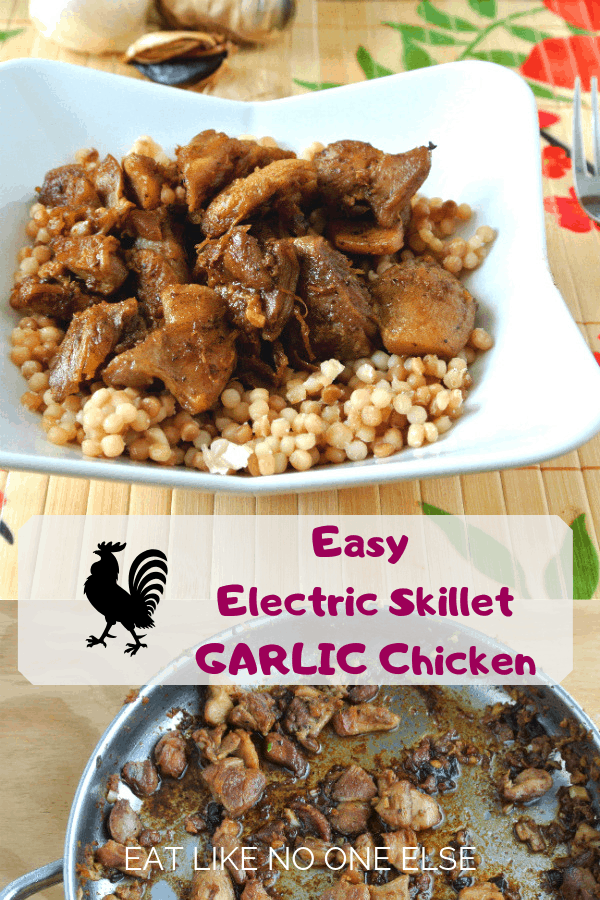
Garlic Electric Skillet Chicken

Thought it was time to add another electric skillet recipe to the site. This one is for one flavored by the power of garlic. This basic recipe is for two, but you can easily double or triple it for whatever you need.

Ingredients
1 large or 2 medium sized boneless skinless chicken breasts
1/2 stick butter
1 tablespoon canola oil
3 cloves garlic, minced
freshly ground black pepper
kosher salt
dried oregano

Start by melting some butter in your electric skillet set to the lowest setting. Add in the oil, this increases the smoke point of the butter. Take your chicken and cut it into bite size pieces. This will allow the chicken to cook faster as well as increase the surface to mass ratio, which means more chicken is browned and browning equals flavor. Add salt and black pepper to your chicken pieces to taste.

When the chicken is ready, add your chicken and garlic and increase your skillet to 300 degrees or medium high. Turn your chicken often to preventing sticking and to cook evenly. It should take about 10-15 minutes. If you are wondering if you are done, simply take out a piece, cut it in half. Any juices should be clear and there should be no sign of pink. Before you pull your chicken add some dried oregano to give it a flavor boast and serve!

Share

Roasted Chicken with Ramps

Recently I discovered ramps at a local grocery store (Produce Station). They are also called wild leeks and can add an onion/garlic flavor to a dish. Click here to read my post on what ramps are. Ramps go excellent with chicken.

Ingredients
1 whole fryer chicken (make sure to remove whatever is in the cavity, giblets, heart, etc.)
1 bunch of ramps (6-8 ramps)
olive oil
kosher salt
freshly ground black pepper
dried rosemary
dried tarragon
1 1/2 cups chicken broth (to make a sauce)

* NOTE * Get all your ingredients ready ahead of time so that there isn’t an cross-contamination. The last thing I want is for you to touch the chicken and then touch your containers of herbs to get them out for this recipe. Put everything you need in small bowls before you even touch your chicken and make sure to wash your hands before you touch anything else in your kitchen.

Preheat your oven to 350 degrees. Take your ramps and cut off the leaves, leaving the pink stem attached to the bulbs. Save the leaves for later use. Take the bulbs and drizzle some olive oil over them, then sprinkle kosher salt and black pepper over them.

Now place your chicken on a roasting pan. Using a pairing knife or kitchen shears, pull back the skin without removing it, over the breasts, thighs, and drumstick areas of the chicken. Place the ramps under the skin in these areas. Sprinkle some dried rosemary and tarragon over these same areas and the entire chicken.

Insert a probe thermometer into the breast on an angle, being careful not to hit any bone. Cook the chicken until the temperature reaches 165 degrees. The dark meat should be at 180, so make sure to check that too, and if the dark meat is not ready, put foil over the breast and cook until the dark meat hits 180.

Now to prepare the sauce. Take your roasting pan and place it over 2 burners. Add 1 1/2 cups of chicken broth. Scrap all the bits you can off the bottom of the pan and bring to a boil. Add the leaves from your ramps and cook for 2 minutes, then remove them. Simmer the sauce until it has been reduced to your desired thickness. Keep in mind that the more water that you lose, the more salty the sauce will be, so since my wife does not like things too salt and keep the sauce pretty thin.

Share

Chicken Noodle

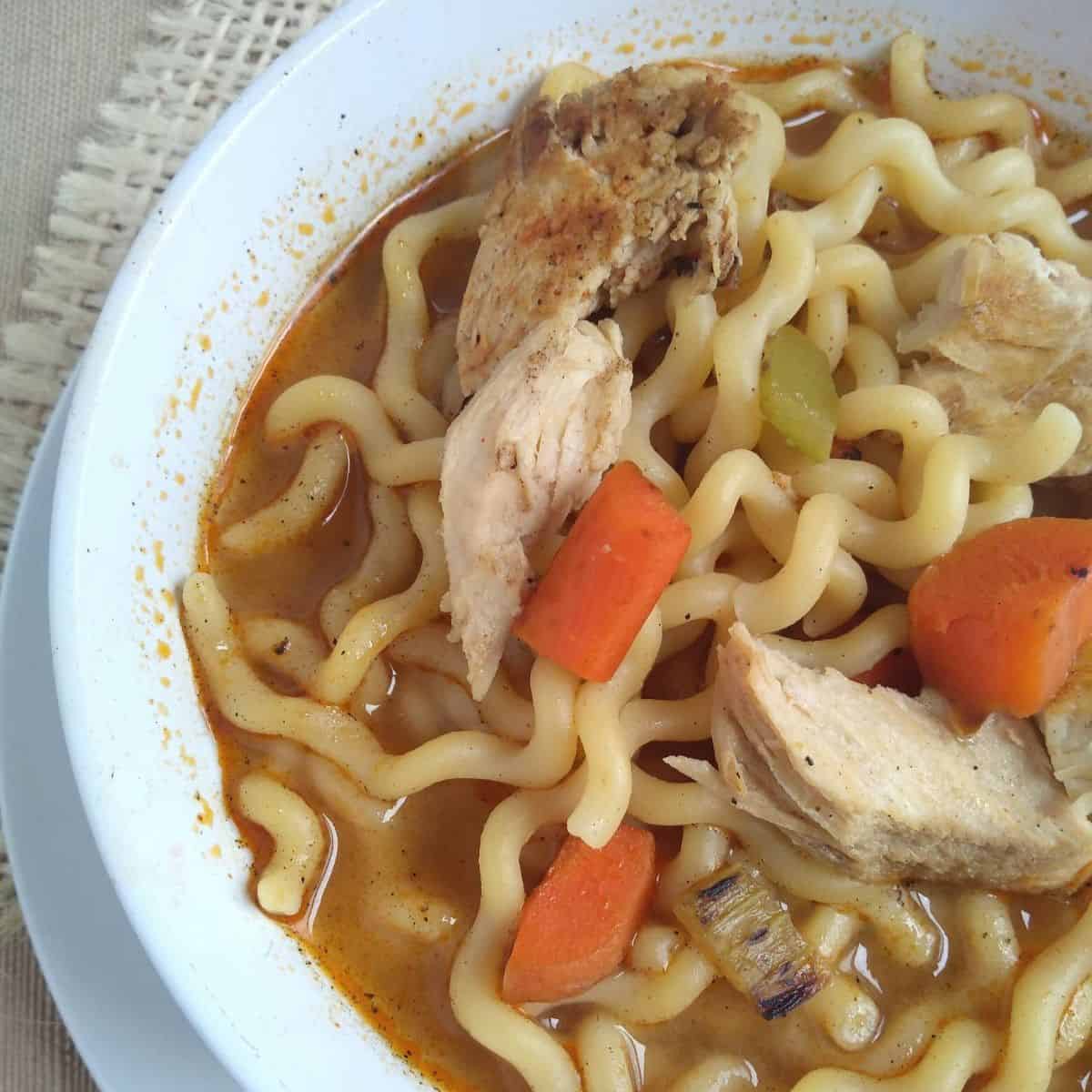
I don’t like the overuse nowadays of the words “comfort food”. It seems like everyone wants to label their top 20 favorite foods as comfort foods. Well I think there is one true comfort food, and that is chicken noodle soup. American mothers have been using it for decades to give to their children when they are feeling under the weather. Unfortunately, alot of those mothers are giving their kids the soup out of a can. But I have a simple recipe for a single serving chicken noodle soup that can be made fast with leftover chicken.

Ingredients
Leftover chicken
4 oz pasta (I like rotini, penne, bow ties)
1-2 carrots
1 celery stalk
3 cups chicken stock or broth
dried basil
sea salt & black pepper to taste

Start by slicking your carrots and celery into bite size pieces. Bring your stock or broth to a boil and add your carrots and celery. Reduce the heat to simmer and cook until the carrots and celery have soften about 8-10 minutes. Now add in your pasta and return to a boil. Once reached a boil again simmer until the pasta is al dente. Then add your chicken, and cook for about 3-5 minutes to just re-heat the chicken. Stir in a heavy pinch of dried basil. Add salt or black pepper to taste. Serve with oyster crackers or saltines.

Share

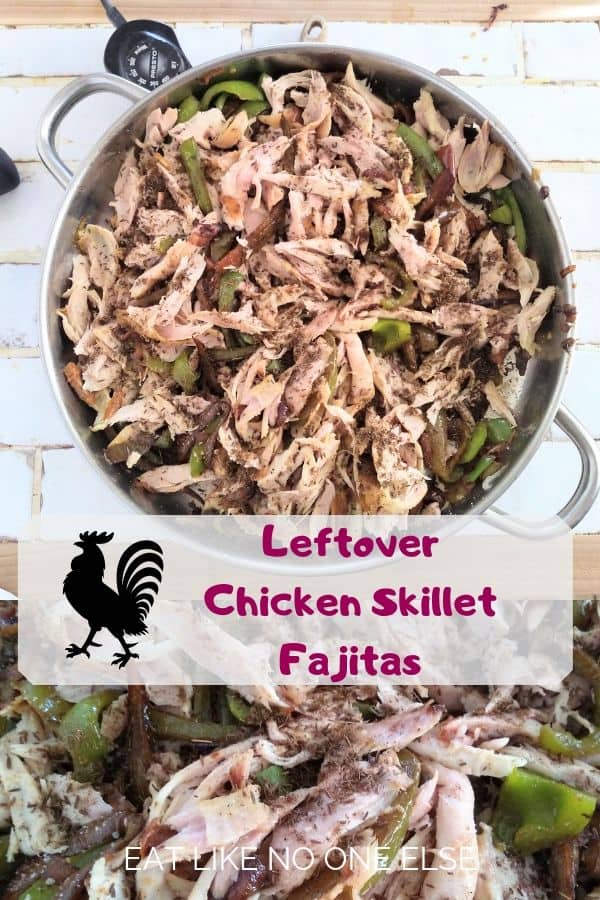
Chicken Faijtas Unwrapped

One of the things that is perfect to make with leftover chicken is chicken fajitas. My electric skillet is the perfect cooking vessel for this job. This recipe is quick and easy, especially if you are using leftover chicken, that only needs to be heated back up.

Leftover chicken (about 2-3 servings worth, broken into bite size pieces)
1 orange, red, or green bell pepper, sliced into strips
1 small onion, chopped
1 teaspoon freshly ground cumin
kosher salt
freshly ground black pepper
cilantro, chopped
canola oil
tortillas
grated cheddar cheese
sour cream

Set your electric skillet to 300 degrees. Add enough oil to just barely cover the bottom of the skillet. Then add your onion and bell pepper. Cook until both are soften, making sure to stir often. Now add in your chicken along with the cumin. Cumin is the key spice to any fajitas. If you have a spice grinder, grind whole cumin for the best flavor. Cook the chicken until it has taken on a little bit of color and is fully reheated. Stir in some cilantro. Add some freshly ground black pepper to taste if you desired.

Serve in a your favorite tortilla. When picking out tortillas (unless you want to make your own), look for local companies instead of the national brand. They are usually fresher and don’t have add chemical or preservatives. The Ann Arbor Tortilla Factory is a great option for those living in my area. Add your favorite cheddar cheese, please shred it yourself, and sour cream if you like for dipping.

Chicken Fajitas Wrapped

Share