Subscribe to Eat Like No One Else Subscribe to Eat Like No One Else's comments

Posts tagged ‘Beef’

good_eats_logo Whenever one is feeling sick, usually some intense TV viewing is a part of the experience. So myself being sick today, thought it make for a good time to review a Good Eats episode I had on my DVR involving one of my favorite subject: steak. Alton has done shows on several different cuts of beef. This show he is focusing on one of the more expensive cuts – the Porterhouse. There is a lot to learn from this episode and I will share some of what I learned below:

The Porterhouse comes from the short loin of area of the cow and contains a piece of strip steak and tenderloin. But it all depends on how those muscles are cut up. Alton explained that the government has determined what is considered a porterhouse and what isn’t. If the amount of tenderloin is less than 1/2 inch across than it is a bone-in strip steak. If you have at least 1/2 inch, then you have a T-bone. If you have 1 1/4 inches, now you got your porterhouse. The reason for the difference in size is that the tenderloin isn’t the same size, it tapers at one end. So at one end you have the bone-in strip and at the other larger end you have the porterhouse. So you would think you would want the steak at the largest end, right? Well the problem with that is that there is a vein of connective tissue in the strip steak portion at that end. This would make that part of the steak hard to chew. So you are best off with finding something in the middle. So when shopping for a porterhouse, make sure you don’t see a white line shaped like a “L”. Or you could pick one that has a tenderloin piece closest to 1 1/4 inches.

Alton also spoke of the dry age process. Meat is made up of a good deal of water and if we can get rid of some of that water, the meat flavor will be stronger. He was able to dry age this steak in the fridge by using a disposable pie tin, some wood skewers, and a paper towel. We changed the paper towel after 24 hours, then let the steak sit in his fridge for 3 more days. This is a technique I would like to try out. In typical Alton style he cooked the steak using a cinder block, chimney starter, charcoal, metal mixing bowl and a grill grate. Of course you can grill, pan-sear, or broil your porterhouse any you want.

Lastly, Alton explains the reason for the name – porterhouse. The steak was first thought to be served at a place that served porter, a dark strong beef. Those places were called porterhouse, hence where the name came from.

Overall, this is one of the best episodes in a while. I learned how to shop for a good porterhouse. As well as how to dry age a steak. I would recommend looking this one up on YouTube or checking Food Network’s website to see when it will air again.

Niman Ranch Cookbook If you are a meat lover there are two things that will make your live even better – buying Niman Ranch products and purchasing the Niman Ranch Cookbook. This fabulous book shares the history of Niman Ranch farms and how they went from a single family to over 500 independent farms all following the Niman Ranch philosophy. This book will teach you where their philosophy is – how they raise their cattle and why, to what they eat. All of these help produce some of the finest quality meat you will find on the market. The book has chapters on beef, pork, and lamb as well as a section on tips on how to prepare these meats. There is also pictures of each animal to show you where you get certain cuts from. These are the best pictures I have seen anywhere of this.

If this all wasn’t enough, there is also a ton of recipes for many delicious meals from Cider-Glazed Pork Chops to Grilled Leg of Lamb to Carne Asada Steak. Many of these recipes are from restaurants that use Niman Ranch meat.

I highly recommend buying this book for all it’s useful information and wonderful recipes. Anyone that likes to cook meat would benefit from this book.

Click here to check out one of my favorite Niman Ranch products – BACON!

Petite Steak It seems like there are a thousand names for steaks, and it can be difficult sometimes to pinpoint what you got. It took me a little bit of searching to discover what a petite steak was. The petite steak as it names suggests is a small steak that is cut from the chuck primal (or the shoulder of the cow). The chuck is known for producing some of the most finger licking food you could imagine, but not normally a tender steak. But the petite steak is an exception. The only problem is that there is a laying of connective tissue that won’t go away even if you burn the thing into ashes. But around that connective tissue is come pretty flavorful meat, you just have to cut around it. Because of this “defect” you should be able to find the steak at a low price, thus it’s a great value. The Nibble.com ranked it as the best value steak. (Click here to see a list of their top 10 value cuts of beef).

Not finding a petite steak in your store? It might also be under the name blade steak or top blade steak. I think it depends on the size of the steak. The smaller version of a blade steak is a petite.

Tip Sizzler Steak

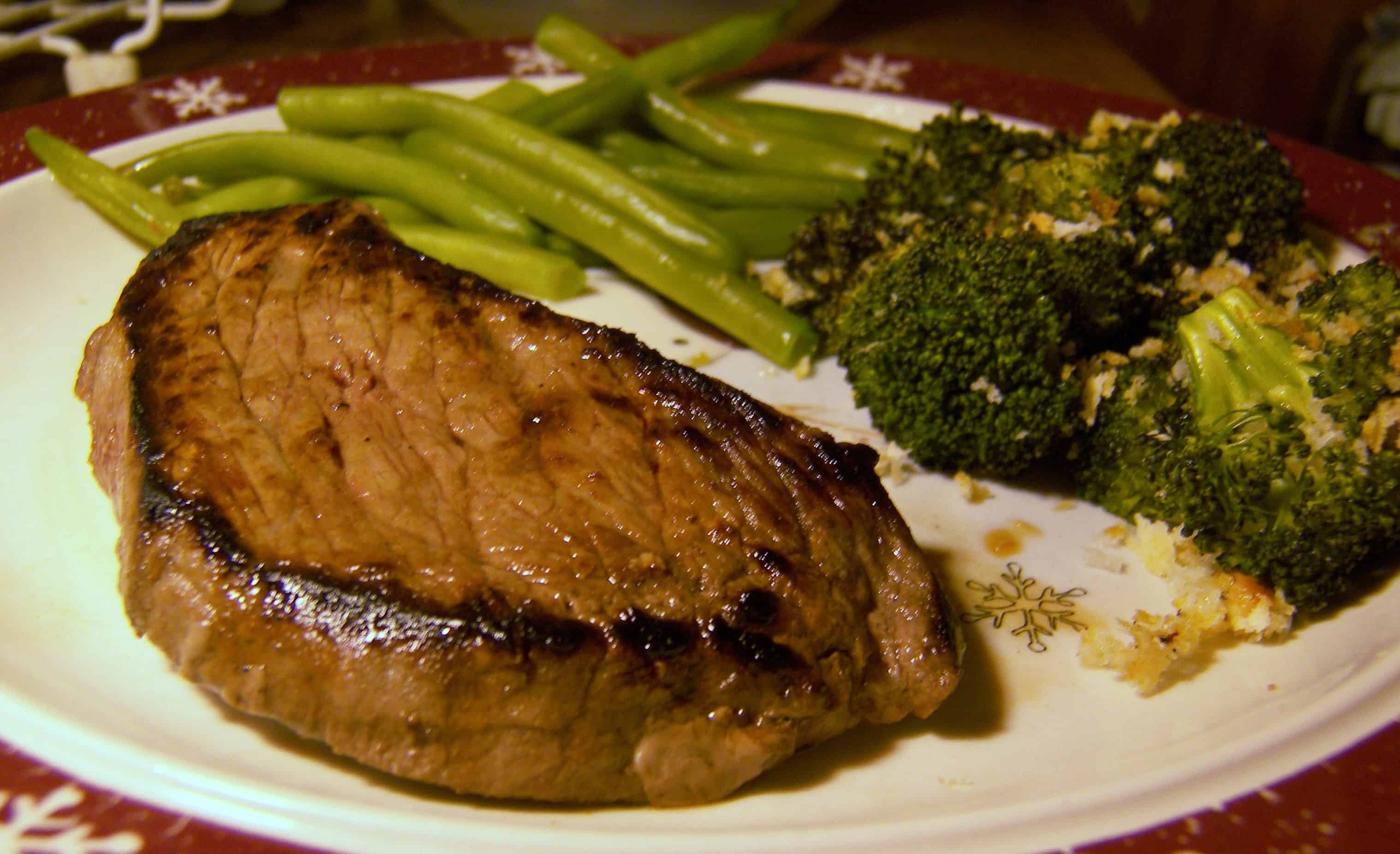
What is a tip sizzler steak? After much research online, I am still asking myself this question. I could not find anything with the exact name tip sizzler steak, except for the Meijer store web site, which is where I purchased this cut. So maybe they are the only ones using this name. With my research I believe I know about where this cut of beef comes from. By looking at pictures of other cuts, I believe that this steak is from the round area of the cow. It is from the area of the round that is close by to the tenderloin section of the animal. This mean that even thought it is a round steak, it may be one of the most tender round steaks. As you move towards the back of the cow, the meat gets tougher. Since it’s more tender, I can get away with using a dry cooking method (pan-searing), as long as I start off with a marinade.
Now when it comes down to fat. There isn’t a whole lot of marbling with this cut, but there was an area of fat that I found after pan-searing was hard to deal with, so I ended up with a little piece that I didn’t eat.

Click here for my recipe for pan-seared tip sizzler steak.

Tip Sizzler Steak

If you don’t know what a tip sizzler steak is, check out my post on that topic. Before you cook this steak, it’s best to marinade it first.

Ingredients
2 tip sizzler steaks
1/4 cup Worcestershire sauce
1/4 cup low sodium soy sauce
2 cloves garlic (minced)
kosher salt & freshly ground black pepper
canola oil

Start by combining the Worcestershire sauce and soy sauce into a plastic bag containing the two steaks. Add the minced garlic and place into the fridge for 2 hours. Make sure you put the bag into another container just in case the bag leaks. Remove your steak a half hour before cooking. A room temperature steak will cook better and quicker.

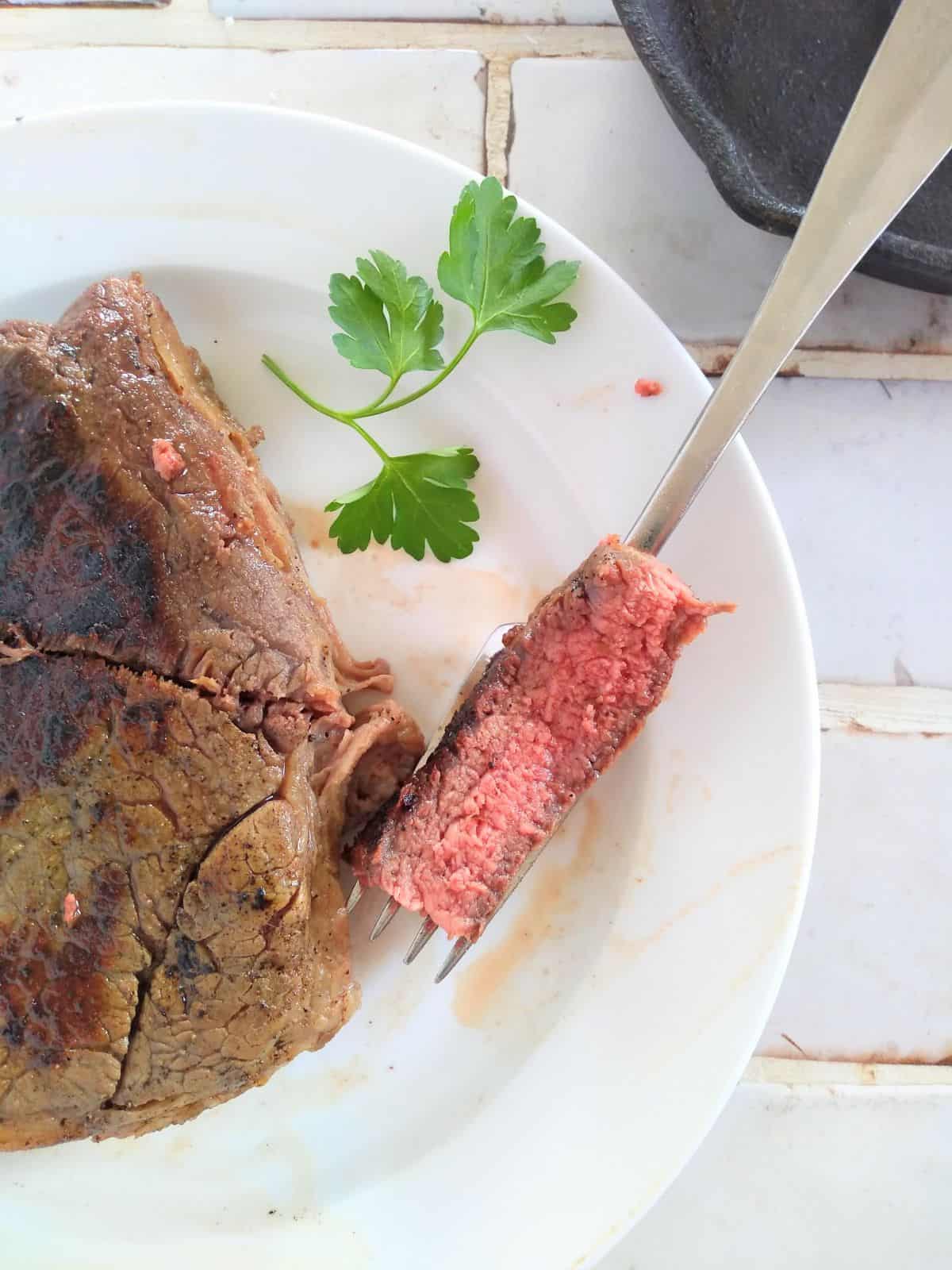
Preheat your oven to 475 degrees. Place a cast iron skillet over medium high heat. Rub a little bit of canola oil on both sides of the steak, then sprinkle some kosher salt and freshly ground black pepper. Once the skillet is ready. Place the steak on it. Cook until a nice brown sear has formed and then flip the steak over. This can take about 45-90 seconds per side. When both sides are brown, place the entire thing in the oven. In about 1 1/2 to 2 1/2 minutes, flip the steaks over and cook another 1 1/2 to 2 1/2 minutes. The reason we are finishing it in the oven is that by the time the inside was done, the outside would be black. The oven will gently finish the steak without burning the outside. I learn this tip from watching Alton Brown’s first episode of Good Eats on how to cook a ribeye.

The best way to know if the steak is done is to do 2 things: use an instant read thermometer and learn what the meat feels like when it’s done. When you push the meat it will have some give depending on the temperature you want it. If you do this enough along with a thermometer you will be able to figure out how much give the steak should have when you push it in with a pair of tongs or a fork. If the steak has no give, then you have overcooked it.

It is a skill to learn how to properly cook a steak and a steak like a tip sizzler, is one that can quickly go from tender to tough. Be patient with yourself and learn through trial and error.

Whole Cut Brisket

Of all the grocery stores I have spoken about on this website, Cattleman’s Meat in Taylor, Michigan has gotten the most hits. So I decided to share with you my experience there this past Saturday (March 13th).

I came there looking for brisket to use on St. Patrick’s Day. Last year, I bought a prepacked corn beef (which Cattleman’s had plenty of) and did not like it at all. The biggest problem was the high salt level. So this year, I wanted a brisket that I could prepare from start to finish myself. They had brisket there for $2.99 a pound. So I bought an entire one. I headed to the back window to have the butchers slice it up for me. I choose to slice each end into a flat cut and a point cut (click here to read my post on the difference between these to cuts). The rest of the meat I had turned into stew meat, that I will use for 2 separate meals.

This was the only beef I bought this time. They also had beef tenderloin for $5.49 a pound, which is the regular price (I paid $4.99 a pound on sale last time I was there in December). Still that beats most places sale price. They also had top sirloin for $2.49 a pound.

Besides the brisket, I also purchased a pound of deli turkey. They have the cheapest prices on deli turkey around. And finally since I was thristy, I picked up a bottle of Frostop Orange & Creme.

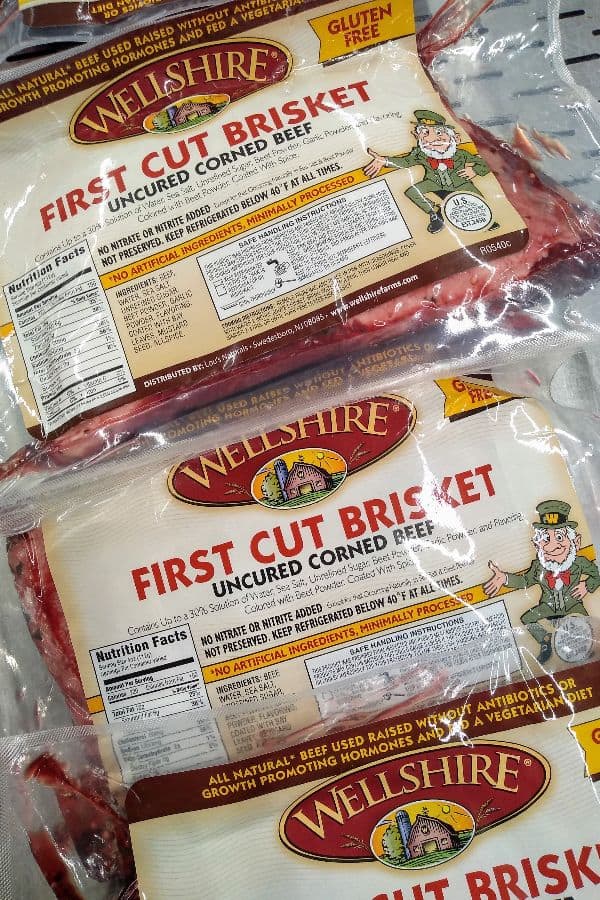
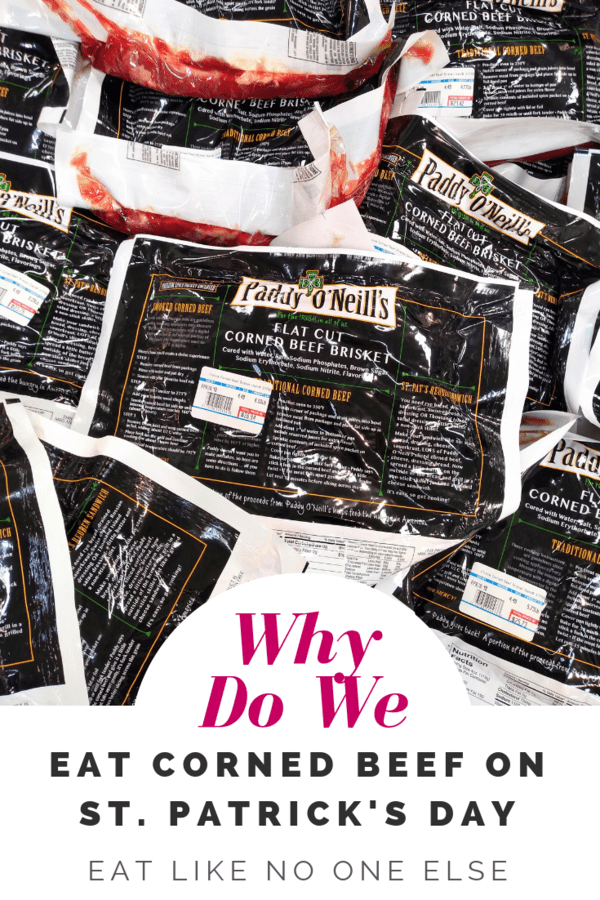
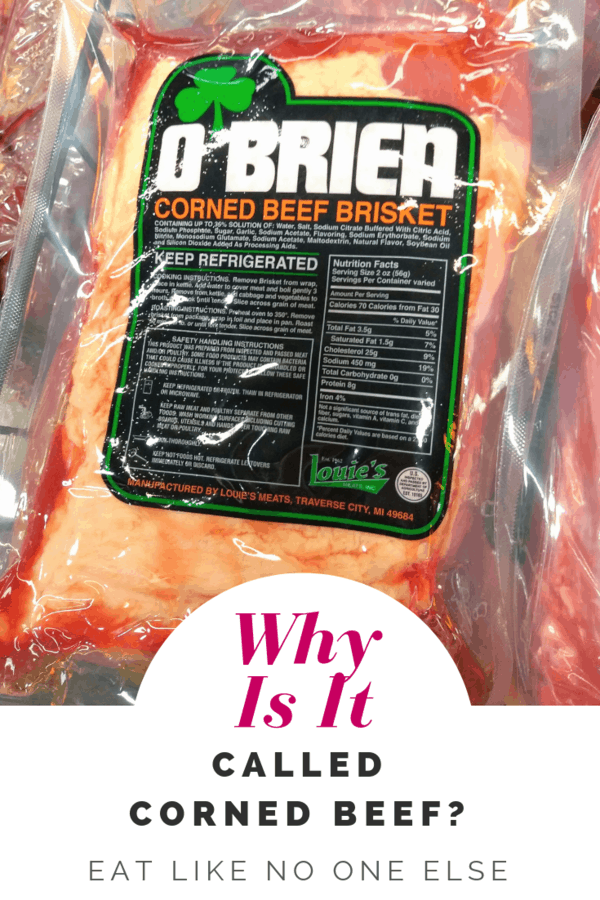
St. Patrick’s Day is fast approaching and the most commonly served meal on that day (at least in America) is corned beef. Where does corn beef come from? The answer is the brisket. The part of the cow brisket is located is in the front of the cow, toward the bottom, near the cow’s front legs. Since the cow uses that area a lot this is a tough cut of beef, so a slow cooking method must be used. Yet it is worth your time because it is a flavorful cut.

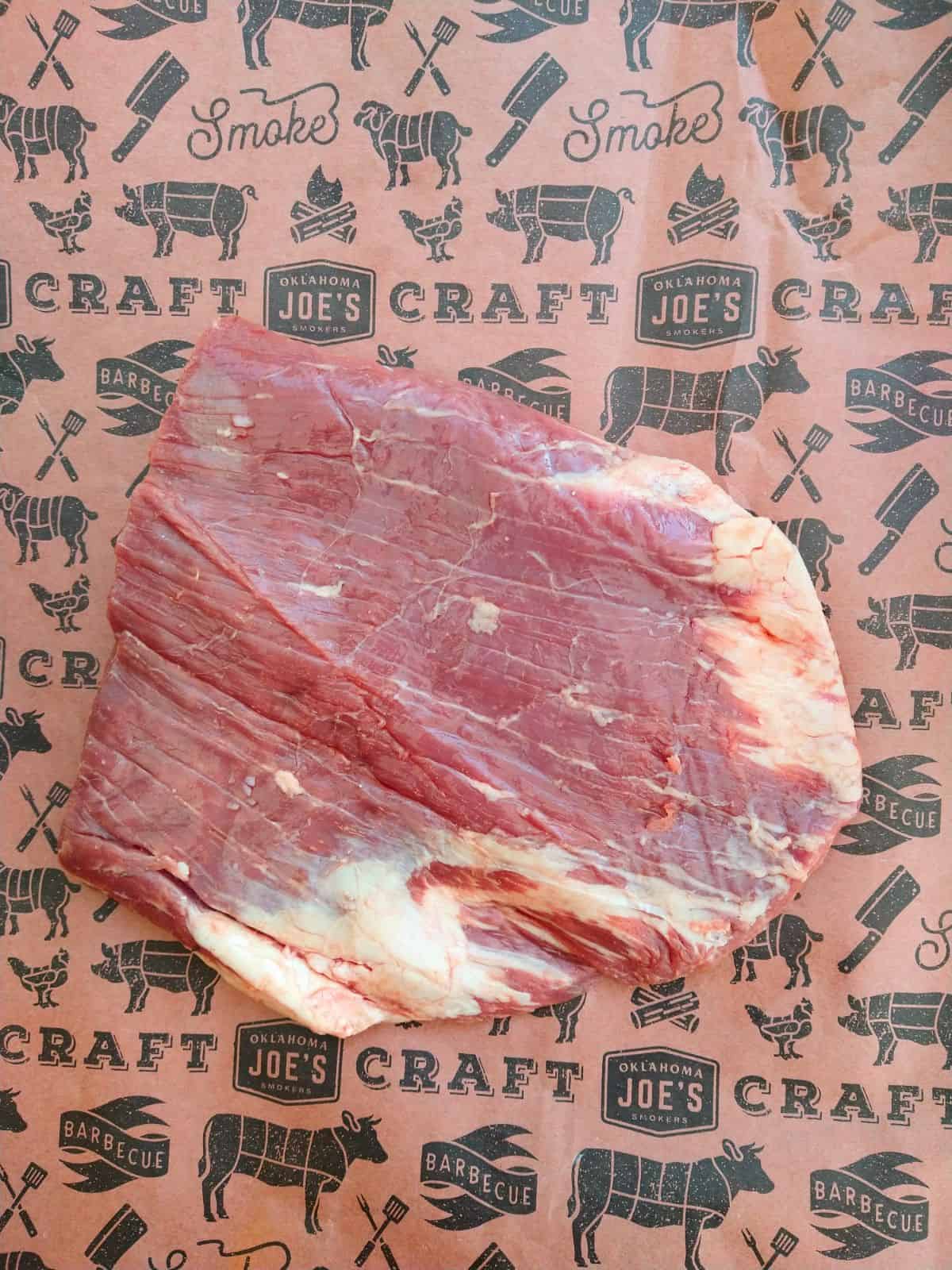
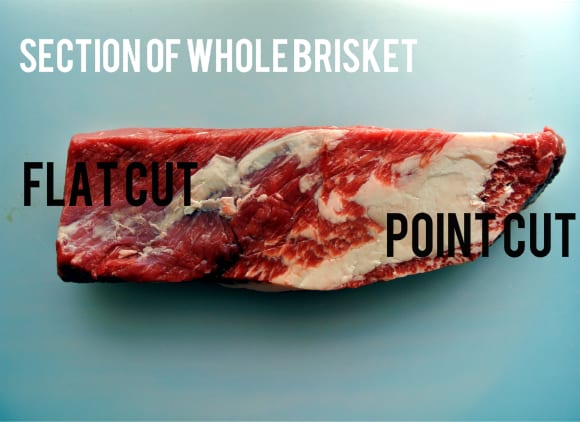
When choosing a brisket, unless you buy the entire brisket, you will have to choose between a flat cut and a point cut. It is very easy to tell the difference by just looking at the cuts.

Point Cut Brisket Point Cut Brisket

A point cut comes to a point at one end. The point cut has a lot of fat running through it, so when you cook it, it comes out nice and juicy. This cut is rarely found in supermarkets, as it isn’t as attractive of a cut as the flat. This is a good choice if you plan on shredding the meat when finished cooking.

Flat Cut Brisket Flat Cut Brisket

The flat cut is a much leaner cut than the point. However it still has a layer of fat on the bottom, that will keep the meat moist. This is the cut you will most often find in supermarkets, as it looks more appealing the the point cut. If you are looking for brisket that will slice up nicely, this is your best bet. It is also the cut used most often when you buy packaged corned beef.

As a side note, in the Good Eats episode “Pickled Pink”, Alton Brown choose a flat cut to make his own corned beef.

good_eats_logo

I just got the latest news on what topics are in the works for Good Eats episodes for 2010. No episode names or airdates have been anounced for these topics as of yet, but I will keep you informed of any additional information. Here is the list of the topics that are in production:

Asparagus
Banana Pudding
Tacos
Porterhouse
BBQ Chicken
Grilled Pizza
Pumpkin
Eggs Benedict

A lot of great topics to come! Looking forward to seeing those episodes.

Chuck Arm Steak

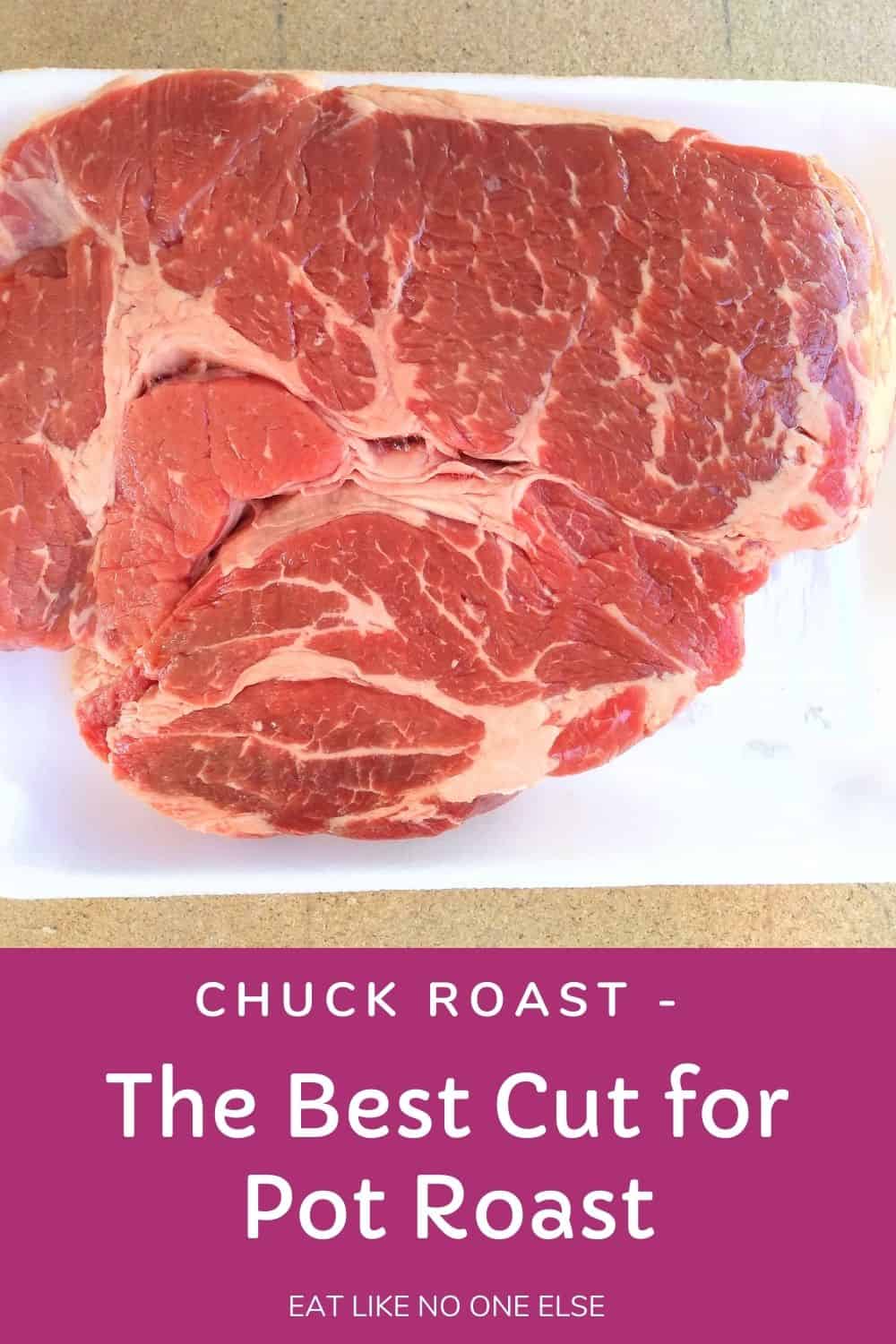
Have you ever seen a chuck arm steak in a store and wonder what to do with it? Or even what it is? Well I have that answer for you. The chuck arm comes from the chuck primal on the cow. The chuck primal is located towards the head of the cow. The muscles in this area get a lot of work, so the meat tends to be tough. The positive thing is that cuts from this area are plentiful thus cheap. The arm cut is located in the bottom half of the chuck primal. This cut doesn’t have as much fat in it than other cuts of chuck like the chuck eye which is perfect for pot roasts and can be made into a grilled steak. But the arm wouldn’t work as well for either. I definitely would never grill it, as it will be really tough. The only way to cook it is by braising it (which is cooking in a small amount of liquid). Braising the meat low and slow will give the connective tissues time to break down so that when you eat the meat, it won’t be so tough.

Here is how I cooked my chuck arm steak.

1 pound chuck arm steak

2 cups Beef or mushroom broth

4 oz. tomato paste

1 teaspoon dried thyme

kosher salt

canola (or vegetable) oil

Preheat your oven to 300 degrees. Before you begin to braise your meat you have the chance to add some additional flavoring by searing it. Heat up a grill pan (cast iron would be great) over high heat with a little bit of oil in the bottom, just enough to cover. While doing that season both sides of the meat with kosher salt. When the pan is hot in about 4-5 minutes, place the steak on the pan. Wait about 1 minute and then flip and cook for 1 more minute. Since this is a steak cut, so it’s a thinner piece than a roast, we just want to cook it quickly to give it a good sear to add additional flavor. We definitely do not want to cook the steak entirely now. Once the steak is done searing, remove it to a plate.

Now it’s time to prepare the braising liquid. Take the 2 cups of mushroom or beef broth and mix in the 4 oz of tomato paste until combined (the acids in the tomato will help break down connective tissue). Then add 1 teaspoon of dried thyme, mix to combine. Place your steak onto some heavy duty aluminum foil. You will want to completely cover the steak in foil so make sure you have enough. The reason for this is to make the best braise the meat needs to be completely surrounded in the liquid. With the foil you can accomplish that. Just make to place the entire thing in some kind of pan because no matter how good you seal it, there is still a good chance some liquid will escape. Better for it escape into a pan than onto the bottom of your oven.

Place in the oven and cook for about 1 hr 30 minutes to 1 hr 45 minutes. This should give the connective tissues enough time to break down so that the meat will be tender and not long enough to dry out the meat. Alton Brown said in one of his book that meat in the oven acts like a sponge that is being rung out. It’s liquid escapes to the outer surroundings. Since the arm steak has less fat than other chuck cuts, there is a greater chance for the meat to dry out, even though it is surrounded by liquid.

When your meat is done, give it at least 5-10 minutes to rest before cutting into.

Chuck Arm Steak (Cooked)

So now, next time you see an arm steak in the store you will know what to do with it. It is possible to turn this cheap, tough cut into something to enjoy!

MushroomBasePotRoast

Before you begin I recommend you read my post on “How to Cook a Flavorful Pot Roast“.

For this recipe you will need the following ingredients:

7-bone chuck roast

canola oil

Better then Bouillon Mushroom Base (or any other mushroom soup base)

3-4 cloves of garlic

1 onion (your choice of type)

kosher salt

freshly ground cumin

flour, corn starch, or arrowroot (if you wish to make gravy)

A couple notes about these ingredients.

1.Better than Bouillon makes a wide range of soup bases. I use them all of time whenever a recipe calls for a broth. For this pot roast, I am using their mushroom base. You can use another brand if you want, but I think Better than Bouillon is better than the rest.

2. Buying whole cumin and grinding it yourself (check out my post on spice grinders) will provide you with the best flavor possible. Spices lose flavor over time, so who knows how long ago that pre-ground cumin was ground.

3. You may be wonder where are the carrots? Well I think if you cook the carrots along with the roast you just end up with carrot mush. But if you have to have the carrots, feel free to add as much as you want. I will cook my carrots separately.

To begin, I recommend using a 4-5 quart cast iron dutch oven. The best part about the dutch oven is that you will be able to brown the meat in it, cook the meat in it, and prepare gravy in it. That will save you some time doing dishes afterward.

First, you will want to season your meat. Liberally season your meat with kosher salt and cumin on both sides. Second, place a small amount of oil in the bottom of the dutch oven, just enough to cover the surface. Third, set your burner to it’s highest setting. Once it has heated up, place the roast in the dutch oven and let it cook for 4-5 minutes. Then flip over and let that side cook 4-5 minutes. Take your roast out and set it aside. You should have some nice brown color on each side.

BrownPotRoast

Now you will want to soften up your onion and garlic. Chop up your onion and garlic cloves and place them in the dutch oven (turn the burner down to medium) and cook them for a couple minutes, just to soften and bring out some flavor. Be very careful not to burn them as burning will only add bad flavors to your final dish. Remove them from the pot and set aside.

Set your oven to 200 degrees. Place the meat back in the dutch oven. Add enough water to come about half way up the pot roast and then add in your mushroom base (if you use an already made mushroom broth, then just pour that it until your half way up the roast). Add the garlic and onion on top of the roast.

CoveredPotRoast

Place the lid on your dutch oven and set it in the center of your oven. Let is cook for about 3 1/2 – 4 1/2 hours. You will know it’s done when it is fork tender.

Now if you wish to make a gravy, take your meat out of your dutch oven, set the dutch oven on a burner that is set to  high heat. In order to help the liquid thicken, you can use either corn starch, flour, or arrowroot. Just make sure you mix whatever you are using with some water first, so that you don’t end up with lumpy gravy. Cook your liquid until it thickens to your desire consistency.

For a side dish, mashed potatoes are the obvious choice (you have gravy ready to make for them). Read my post on how to make mashed potatoes.