Peas and Oats Sprouting

One of my favorite times of year is when I get to plant my peas in the ground. It’s the favorite garden veggie of choice at this household. The kids can’t get enough for those candy-like peas picked fresh from the garden. When I was looking up some information on peas this past winter I came across the ideas of growing oats with the peas. The oats are planted at the same time as the peas. The peas can then climb up the oats as they grow providing a trellis that not only is a lot cheaper than buying fencing but also add nutrients to the soil. I am excited to give this a try. I will keep you on the progress as the plants grow.

Related link: See my post on Cheap Pea Trellis Options

Peas and Oats Sprouting

The varieties of peas that I am growing this year are: Super Sugar Snap, Green Arrow Shelling Peas, Mammoth Melting Snow Peas, Oregon Snow Peas, Wando Shelling Peas.

When planting the peas and oats I made sure I had enough room to walk in between each row so I could get in to access the peas when they are ready. I marked each row with a brick and made sure I could fit both my feet between each row. The pea plants themselves can be planted close together as they have shallow rows and I find thrive when competing with their neighboring plants.

Peas and Oats Sprouting

I planted my peas right at the end of March. The weather has been back and forth with a lot of cool, below freezing nights. While peas and oats can withstand these frosty nights it took the seeds a while to germinate – over 2 weeks. By the end of April the peas started to establish themselves with their leaves unfolded and signs of the tendrils being formed.

Peas and Oats Sprouting

I have never grown oats before so I am interested in seeing how they take off. The variety I choose was Cayuse Oats. Right now the are both the same height as the pea, depending on the individual plant. All I need is for the oats to get tall enough for the peas to have something to grab onto.

Share

I love to garden. I love the thrill of bitting into food that I grew myself. What I don’t like is the expense you have to pay to start up a garden. It starts adding up quickly. I moved recently, so I am kind of starting over this year. You can be sure I will be looking for ways to save some money. That is what got me thinking about searching out cheap options to use as a trellis for growing peas. There are plenty of things that are easy to run out to Home Depot to pick up. I would rather find a cheaper alternatives. Here are some that I have come up with. I would love to hear if any of you pea growers have tried these before.

Using Sticks
At some garden stores you can buy pea sticks. Why buy what you can find around your yard. Search your yard after the next storm or windy day for sticks that you can use. The trouble is getting them the right size. The differences can provide a rustic charm. You have to make sure your stick is going to stand up and not break after the peas have made their way up them. Also you must be concerned with height. Check to see how high your peas grow. Finding sticks that are really tall might be a problem. You can consider going with
shorter varieties of peas.

Peas Tomato Cages

Using Tomato Cages
A good way to get multiple uses out of something. Peas can grow on tomato cages just find. The best part is peas are a spring crop. You can grow them on the cages, harvest them, and still have time to put them on the tomatoes before they collapse. I tried this one year. It did well. Althought my peas eventually got too tall for the cages, so you have to watch the height of your cage versus the height your peas are suppose to grow.

Using Wheat/Oats
Just yesterday I read on a seed website the idea of growing oats next to the peas. The oats provide support as the peas grow. I have done a similar concept with growing beans on corn stalks (part of a Three Sisters garden). I am really intrigued by this idea. I don’t know how the timing would work out. Plus corn stalks are stronger than wheat or oats. Has anyone else given this a try before? I have done some research but haven’t specifically found someone who employs this method. It’s a great idea as long as you can time it right.

I will be on the look out for more cheap alternatives. Don’t let expensive trellis stop you from growing peas. They are one of my favorite crops of the year. Nothing beats the sweetness of a shelling and eating a pea right out in the garden. They are candy to my kids!

Share

If you live in one of the more northern climates, you might want to get a jump on the growing season. I live in Michigan. I try to plant as soon as possible. This year, since the winter was mild, the ground never really froze. We had an early start to spring like temperatures. The next 10 days it’s not even predicted to fall below freezing at night. So I am ready to garden. But still wanted to give my seeds the best chance. To do this I decided to help warm up the soil a bit. The easy way to do it – black garbage bags. By laying down black bags on top of my soil, I am drawing in heat, and this will help give the soil temperature an additional boost. It is also good for keeping weeds at bay before you are ready to plant.

The day I put them down it was really windy, which was good because I got to test what would keep the bags from flying away. I am lucky that I have a lot of bricks and stones on my yard left behind by a former tenant. I just put a stone at each corner.

Why Garbage Bags?
They are cheap. It’s a lot quicker than having a roll of black plastic, which you are going to have to cut. The beauty of the garbage bag is you can remove them one at a time. Say you only want to plant in one spot, you can just remove the bag(s) from that spot.

How Long Do I Need to Have the Bags Down For?
I would say as long as you can. As long as you don’t think it’s really going to snow a lot again, I would put them down ASAP. Then when you are ready you can remove them.

What About Drainage?
You should poke some holes into your bags, so that water can drain down into your soil.

When Will It Not Be Necessary?
Once you pass the frost free date in your area, then I wouldn’t bother putting them down anymore, your soil should be ready. I am most using them for early crops, like peas, broccoli, lettuce, and cabbage.

Share

Introduction Nothing is better from the garden than fresh peas. It’s that time of year again to begin to start planning for the upcoming garden season here in southeast Michigan. This year I am going to try growing Oregon Giant Snow Peas. I grew Dwarf Grey Sugar Snow Peas last year, and while they produced pretty pink flowers, the snow peas themselves weren’t all that great. When it come to growing vegetables, I want something that is going to taste good, first and foremost. I have heard of Oregon Giant Snow Peas before, so I thought I would give them a try.

When to Plant
Planting peas on St. Patrick’s Day is encouraged by some garden experts. Peas like growing in cool weather, but you soil has to still be workable and warm enough for the peas to germinate. It has been a ridiculously mild winter here, so I am shooting for the St. Patty’s start date this time around. The latest I would plant them in my area would be mid-April. You can also plant them in the end of summer for a fall harvest, but I have found that they never do as well as in the spring time.

Should I Soak the Seeds Before Planting
This is a hotly debated issue. Some people soak, some don’t. The point of soaking would be to help the seeds germinate faster. The last thing you want is to plant some seeds and have them just rot in the ground. If you are concerned your soil might not be as warm as you would like it, then go right ahead and soak, but only for 12-24 hours.

Do I Need a Trellis for These Peas?
The pea pod of this variety are giant, not the plants. They grow to about 2-3 feet tall. So while you could go without giving them any support, I would still give them some. I think the plants do better when supported and they are also easier to harvest.

Can I Start the Seeds Indoors?
I don’t think it’s really necessarily. Plants can be difficult to start indoors. If you don’t do it just right they become leggy. I would just directly sow them into the ground.

Expected Harvest
I am aiming to plant my peas on March 17th. The upcoming forecast calls for several days where the temps don’t even go below freezing, so I am thinking I can plant early this year. It’s a 70 day harvest period. So right around the start of June I should be harvesting my first peas.

Share

When it comes to gardening I like to explore new varieites, and new tastes. But that doesn’t mean I ignore old favorites. I grew Wando shelling peas last season (see all my posts from last year) and they were a big hit, especially with my daughter. So I purchased some more to grow this year. I am growing them in two different locations. One at home and one at my community garden plot.

Wando peas are shelling peas. This means the outer pods is not edible and you must remove the peas before eating. There is usually about 6 peas or so in each pod. So it can be a lot of work to shell them, but the flavor and sweetness cannot be beat!

When to Plant
As soon as the soil is workable in the spring. Peas like to grow in cool weather, but they need the soil to be a warm enough to germinate. So try to plant them during a time of the spring when you are having warmer than normal temperatures.

How to Support
Wando peas need support to grow best. In one location I have in between my rows of peas, some small stakes with some netting stapled to them. In my other location to save money, I decided to use my tomato cages, since I didn’t need them yet and they are cheap so I can always buy more.

Starting Seeds
Peas are easy enough to start outside directly in the soil. When I was just learning to grow them, I did start some inside and I found they didn’t do well transplanted.

Expected Harvest
I planted my Wando peas in two spots at two different times in two different types of soil. So it will be interesting to compare the two. I expect my harvest should be taking place right around or slightly before the first day of summer.

Share

Introduction
This is my 3rd year of growing peas, and it’s become one of the most anticipated crops in my family. You will never match the sweetness of freshly picked peas. I am growing several different varieties this year. One of them is Dwarf Grey Sugar Snow Peas. This is an old variety that been around since the late 1800s. It has been able to stick around because it’s a reliable producer. I have heard mixed reviews on these peas. Some loved them, some though they were much better varieties of snow peas available.

Snow peas can be eaten whole. The pods are flat and needed to be eaten before the peas inside mature. You can tell the difference between them and sugar snap, as those peas produce an edible round, plumb pod.

When to Plant
Some people say you can plant them on St. Patrick’s Day. And you can as long as your soil is workable. But the thing is peas need warm enough soil to germinate. But when they have germinated, they like to grow in cooler weather. So your best bet is to plant them during a warm spell in the spring and then hope for a cool down once they are growing.

Starting Seeds Outdoors
Snow peas are easy to grow from seeds and usually emerge between 7-14 days. Peas have tender roots, so I don’t recommend you transplanting them. I also found that you can plant them close together, as they grow upward. Even thought these are a dwarf variety, like with all my peas, I provide some kind of support. To save some money this year, I just used tomato cages, since they aren’t in use as tomato cages right now.

Expected Harvest
I planted them a couple weeks ago. Peas grow fairly quickly. The harvest time for this particular variety is 57 days. Depending on weather, I will be eating them in mid June, right at the end of spring.

Share

Wando Peas at 5 Weeks Gardening can be a great rewarding experience. One of the most rewarding experiences is growing your own peas. Peas fresh picked from the garden have a sweet flavor you will never find in a grocery store. I like to grow shelling, sugar snap, and snow peas. But growing them doesn’t come without it’s challenges and setbacks. Yesterday, I was speaking with a friend and she said that after three weeks of being in the ground her peas still had not sprouted. So upon further examination, she discovered that her peas had simply rotted. Why does something like this happen? Well we have been experiencing a cold, very wet spring. Neither of these things are good for peas. Peas do like to grow in colder weather than other crops, but they do need the soil to be a certain temperature in order to germinate. The soil needs to be at least somewhere around 45 degrees for germination. We have had several days were our temperatures struggle to reach 45 as a high. Since germination has been slow, the amount of rain we have gotten most likely caused my friend’s peas to rot. These conditions are not the norm for our area.

Wando in a Bowl Turning my attention to my own garden. I was concerned that same thing was happening to me. I checked my peas today and even thought it has taken them twice as long as normal to germinate, I found some signs of green life sprouting out of the soil. I planted my seeds about a week or so later than she did.

So what should you do if you find your peas are not sprouting? After about 2 1/2 weeks or so, pick an area where you planted and dig it up carefully. See if your peas are rotted. If that is the case, you still have time to replant, so give it a second try. If you find your peas plant are there, not rotting, but not seeming to grow, then it’s possible you have some bad seeds, try a different source and try again.

Share

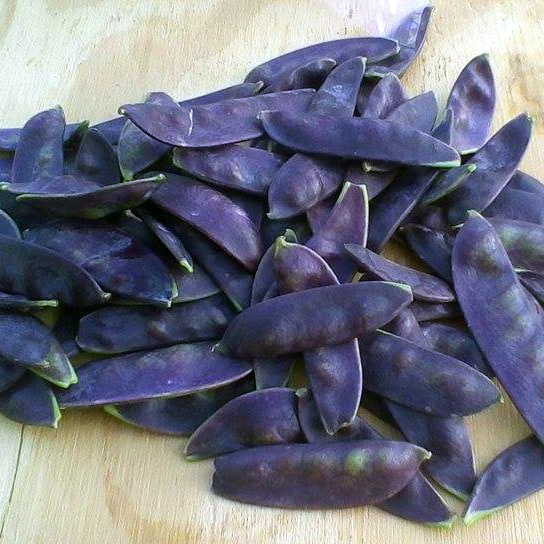
Yellow Snow Peas I received a catalog from John Scheepers Kitchen Garden Seeds this evening. I wanted to share something I discovered – yellow edible pod peas. These are snow peas. They are the flat peas that you can eat pod and all. Yellow split peas are readily available, but I have never seen a fresh yellow pea. The variety is called “Golden India Edible Pea Pod”. It is an heirloom variety. The vines can grow to 6′ tall, so they need some kind of support. No matter what heights the peas I am growing are suppose to grow to, I always give them support. Not only are these peas are unique color, but the flowers that appear before the peas are two-toned purple. Growing these would be a beautiful addition to my garden. Plus I like to grow different varieties of peas in the same area, and if I had yellow peas it would be easy to tell which peas are which.

Besides just the appearance outdoors, I live different colored vegetables for indoor use (that is cooking). I love making up a medley of carrots and green beans. The two contrasting colors makes the dish more appealing. Even more so when I add in some yellow wax beans. So a mix of green and yellow peas would look good on the plate.

If you wish to purchase these peas, click here for the Kitchen Garden Seeds catalog.

Another option is to buy them from Planet Natural’s website. They offer free shipping on heirloom seeds.

Share

Wando in a BowlQuestion: What is a good recipe for wando peas?

Answer: Wando peas are a variety of shelling peas (peas that you must remove from the shell before eating). You can use them as you would in any recipe calling for peas. I think to enjoy their fresh flavor it’s best to just keep it simple. I use them one of two ways. 1) Eat them raw right out of the shell. 2) I melt some butter in a pot over medium-high heat and pour the peas in when the butter in melted. I cook these for about 2-3 minutes, stirring often. Fresh peas are tender so they don’t need to be cooked long.

Click here to see all my posts and pictures of wando peas.

Share

Wando June 30

Click here to read all my posts on wando peas.

At 10 weeks since planting my wando peas, the harvest is at it’s peak. There are peas of plenty to harvest. Each pea pod that is fully grown has about 7 peas, which is more than I had with the burpeeana early variety I planted this season. Wando Pea Pod I should be able to have more peas to pick for a little while still, but it has been very hot here, so I don’t know how much longer they will survive. Wando peas are suppose to be a heat tolerant variety, so I watching to see if these peas survive longer than the other varieties that I currently have in the ground.

My expected harvest for these peas was Friday, July 2nd. I harvested a few peas earlier, but Wednesday, June 30th is when I had a large harvest.

Wando in a Bowl

Share