Subscribe to Eat Like No One Else Subscribe to Eat Like No One Else's comments

Posts tagged ‘Steak’

good_eats_logo Whenever one is feeling sick, usually some intense TV viewing is a part of the experience. So myself being sick today, thought it make for a good time to review a Good Eats episode I had on my DVR involving one of my favorite subject: steak. Alton has done shows on several different cuts of beef. This show he is focusing on one of the more expensive cuts – the Porterhouse. There is a lot to learn from this episode and I will share some of what I learned below:

The Porterhouse comes from the short loin of area of the cow and contains a piece of strip steak and tenderloin. But it all depends on how those muscles are cut up. Alton explained that the government has determined what is considered a porterhouse and what isn’t. If the amount of tenderloin is less than 1/2 inch across than it is a bone-in strip steak. If you have at least 1/2 inch, then you have a T-bone. If you have 1 1/4 inches, now you got your porterhouse. The reason for the difference in size is that the tenderloin isn’t the same size, it tapers at one end. So at one end you have the bone-in strip and at the other larger end you have the porterhouse. So you would think you would want the steak at the largest end, right? Well the problem with that is that there is a vein of connective tissue in the strip steak portion at that end. This would make that part of the steak hard to chew. So you are best off with finding something in the middle. So when shopping for a porterhouse, make sure you don’t see a white line shaped like a “L”. Or you could pick one that has a tenderloin piece closest to 1 1/4 inches.

Alton also spoke of the dry age process. Meat is made up of a good deal of water and if we can get rid of some of that water, the meat flavor will be stronger. He was able to dry age this steak in the fridge by using a disposable pie tin, some wood skewers, and a paper towel. We changed the paper towel after 24 hours, then let the steak sit in his fridge for 3 more days. This is a technique I would like to try out. In typical Alton style he cooked the steak using a cinder block, chimney starter, charcoal, metal mixing bowl and a grill grate. Of course you can grill, pan-sear, or broil your porterhouse any you want.

Lastly, Alton explains the reason for the name – porterhouse. The steak was first thought to be served at a place that served porter, a dark strong beef. Those places were called porterhouse, hence where the name came from.

Overall, this is one of the best episodes in a while. I learned how to shop for a good porterhouse. As well as how to dry age a steak. I would recommend looking this one up on YouTube or checking Food Network’s website to see when it will air again.

Petite Steak It seems like there are a thousand names for steaks, and it can be difficult sometimes to pinpoint what you got. It took me a little bit of searching to discover what a petite steak was. The petite steak as it names suggests is a small steak that is cut from the chuck primal (or the shoulder of the cow). The chuck is known for producing some of the most finger licking food you could imagine, but not normally a tender steak. But the petite steak is an exception. The only problem is that there is a laying of connective tissue that won’t go away even if you burn the thing into ashes. But around that connective tissue is come pretty flavorful meat, you just have to cut around it. Because of this “defect” you should be able to find the steak at a low price, thus it’s a great value. The Nibble.com ranked it as the best value steak. (Click here to see a list of their top 10 value cuts of beef).

Not finding a petite steak in your store? It might also be under the name blade steak or top blade steak. I think it depends on the size of the steak. The smaller version of a blade steak is a petite.

Tip Sizzler Steak

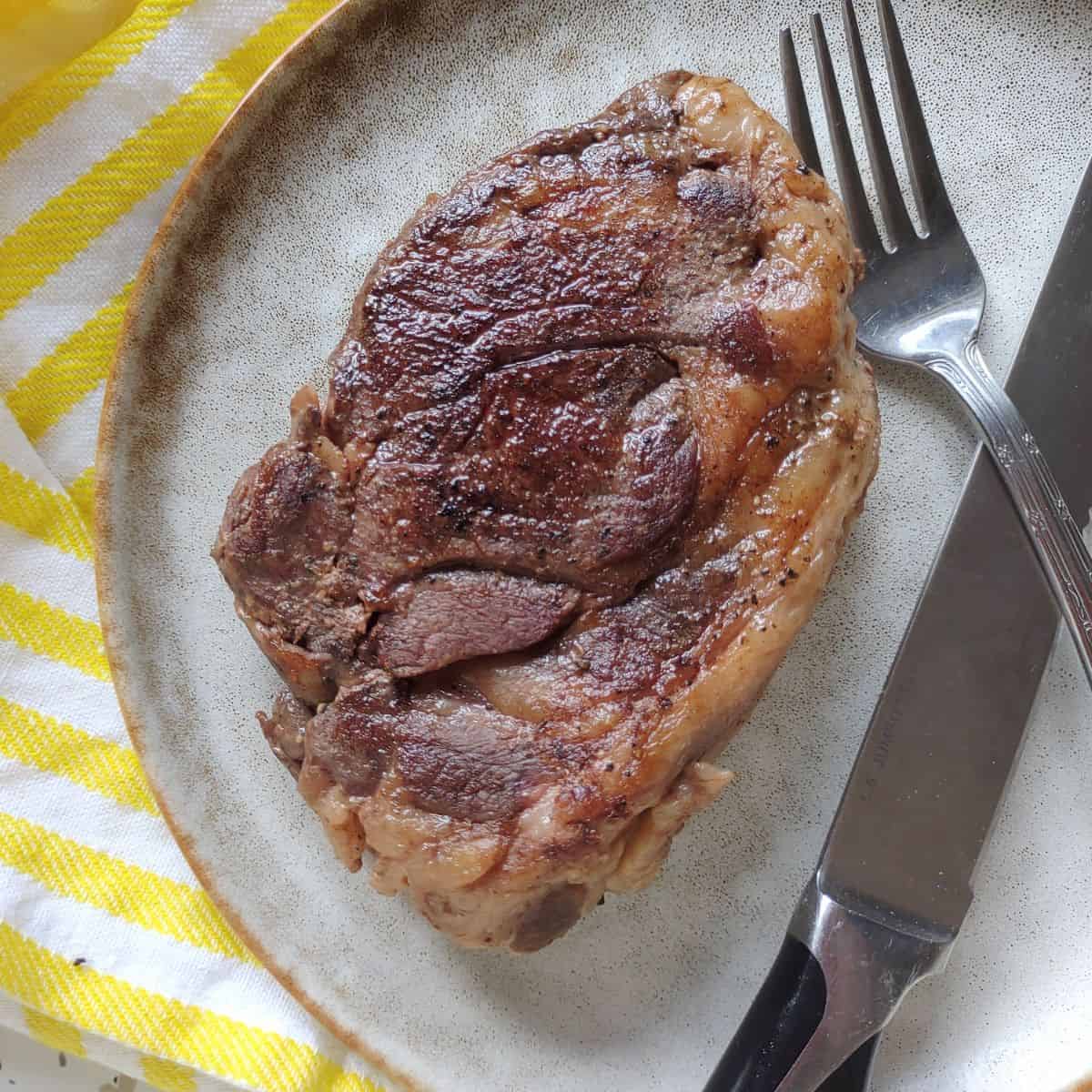
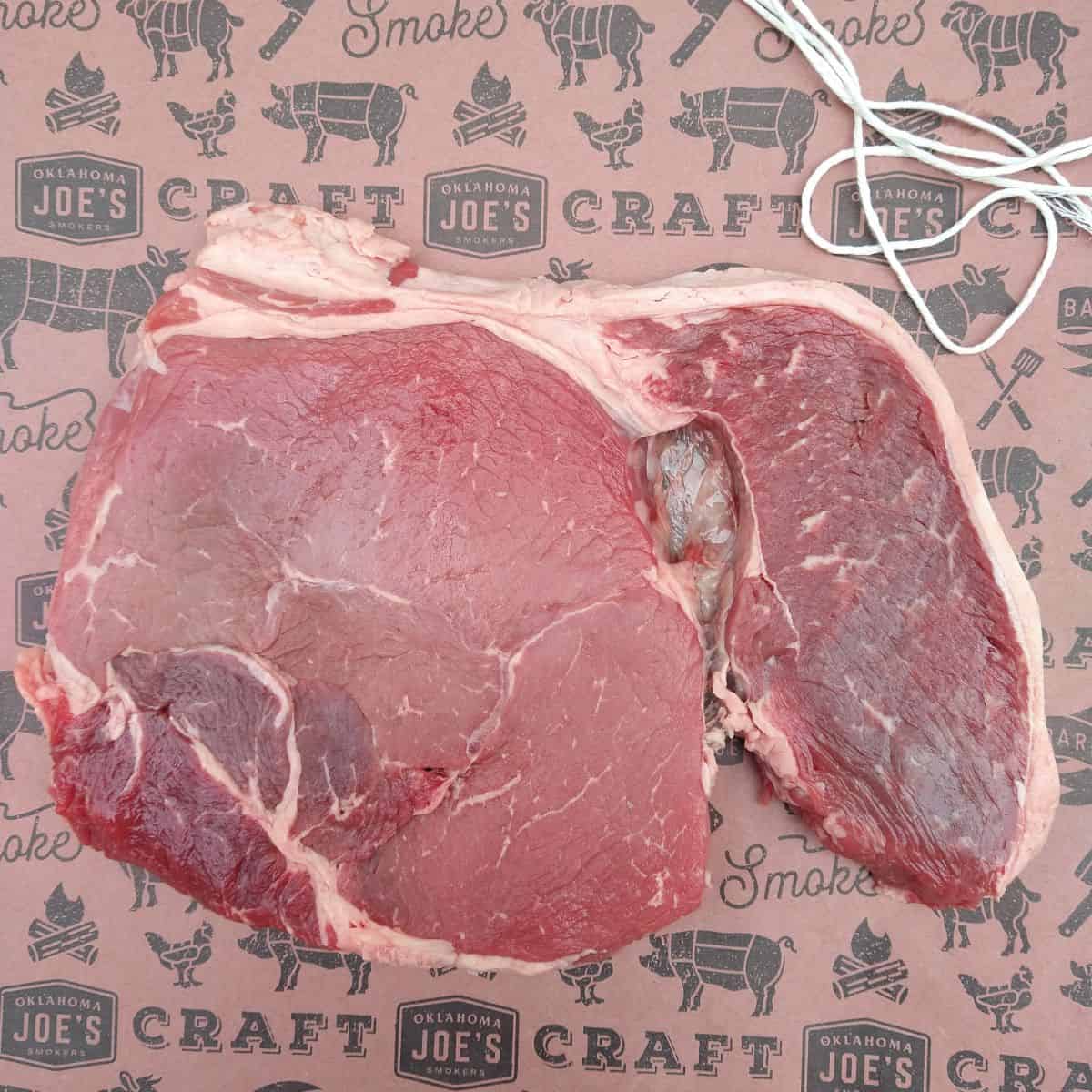
What is a tip sizzler steak? After much research online, I am still asking myself this question. I could not find anything with the exact name tip sizzler steak, except for the Meijer store web site, which is where I purchased this cut. So maybe they are the only ones using this name. With my research I believe I know about where this cut of beef comes from. By looking at pictures of other cuts, I believe that this steak is from the round area of the cow. It is from the area of the round that is close by to the tenderloin section of the animal. This mean that even thought it is a round steak, it may be one of the most tender round steaks. As you move towards the back of the cow, the meat gets tougher. Since it’s more tender, I can get away with using a dry cooking method (pan-searing), as long as I start off with a marinade.
Now when it comes down to fat. There isn’t a whole lot of marbling with this cut, but there was an area of fat that I found after pan-searing was hard to deal with, so I ended up with a little piece that I didn’t eat.

Click here for my recipe for pan-seared tip sizzler steak.

Tip Sizzler Steak

If you don’t know what a tip sizzler steak is, check out my post on that topic. Before you cook this steak, it’s best to marinade it first.

Ingredients
2 tip sizzler steaks
1/4 cup Worcestershire sauce
1/4 cup low sodium soy sauce
2 cloves garlic (minced)
kosher salt & freshly ground black pepper
canola oil

Start by combining the Worcestershire sauce and soy sauce into a plastic bag containing the two steaks. Add the minced garlic and place into the fridge for 2 hours. Make sure you put the bag into another container just in case the bag leaks. Remove your steak a half hour before cooking. A room temperature steak will cook better and quicker.

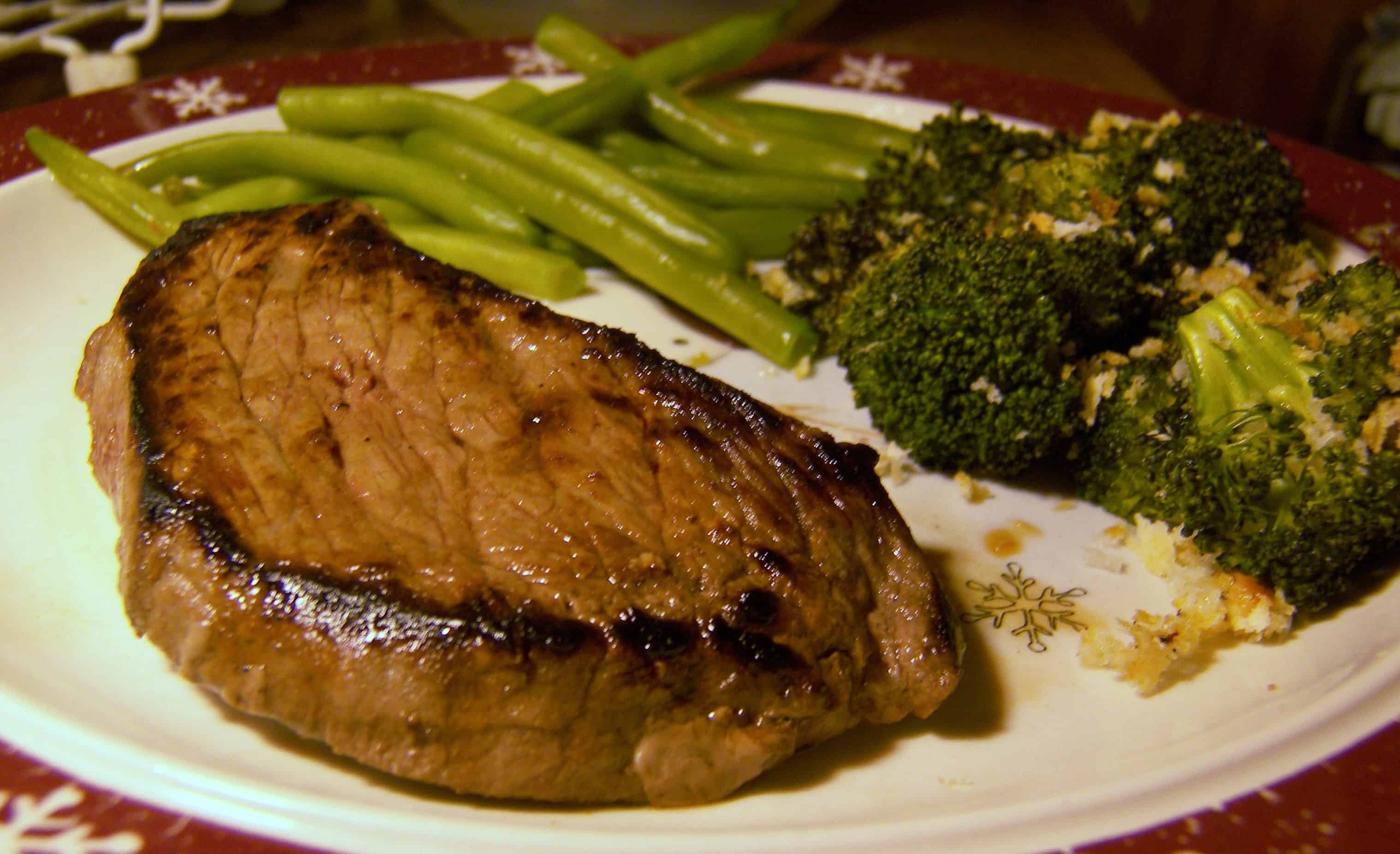
Preheat your oven to 475 degrees. Place a cast iron skillet over medium high heat. Rub a little bit of canola oil on both sides of the steak, then sprinkle some kosher salt and freshly ground black pepper. Once the skillet is ready. Place the steak on it. Cook until a nice brown sear has formed and then flip the steak over. This can take about 45-90 seconds per side. When both sides are brown, place the entire thing in the oven. In about 1 1/2 to 2 1/2 minutes, flip the steaks over and cook another 1 1/2 to 2 1/2 minutes. The reason we are finishing it in the oven is that by the time the inside was done, the outside would be black. The oven will gently finish the steak without burning the outside. I learn this tip from watching Alton Brown’s first episode of Good Eats on how to cook a ribeye.

The best way to know if the steak is done is to do 2 things: use an instant read thermometer and learn what the meat feels like when it’s done. When you push the meat it will have some give depending on the temperature you want it. If you do this enough along with a thermometer you will be able to figure out how much give the steak should have when you push it in with a pair of tongs or a fork. If the steak has no give, then you have overcooked it.

It is a skill to learn how to properly cook a steak and a steak like a tip sizzler, is one that can quickly go from tender to tough. Be patient with yourself and learn through trial and error.

good_eats_logo

I just got the latest news on what topics are in the works for Good Eats episodes for 2010. No episode names or airdates have been anounced for these topics as of yet, but I will keep you informed of any additional information. Here is the list of the topics that are in production:

Asparagus
Banana Pudding
Tacos
Porterhouse
BBQ Chicken
Grilled Pizza
Pumpkin
Eggs Benedict

A lot of great topics to come! Looking forward to seeing those episodes.

Chuck Arm Steak

Have you ever seen a chuck arm steak in a store and wonder what to do with it? Or even what it is? Well I have that answer for you. The chuck arm comes from the chuck primal on the cow. The chuck primal is located towards the head of the cow. The muscles in this area get a lot of work, so the meat tends to be tough. The positive thing is that cuts from this area are plentiful thus cheap. The arm cut is located in the bottom half of the chuck primal. This cut doesn’t have as much fat in it than other cuts of chuck like the chuck eye which is perfect for pot roasts and can be made into a grilled steak. But the arm wouldn’t work as well for either. I definitely would never grill it, as it will be really tough. The only way to cook it is by braising it (which is cooking in a small amount of liquid). Braising the meat low and slow will give the connective tissues time to break down so that when you eat the meat, it won’t be so tough.

Here is how I cooked my chuck arm steak.

1 pound chuck arm steak

2 cups Beef or mushroom broth

4 oz. tomato paste

1 teaspoon dried thyme

kosher salt

canola (or vegetable) oil

Preheat your oven to 300 degrees. Before you begin to braise your meat you have the chance to add some additional flavoring by searing it. Heat up a grill pan (cast iron would be great) over high heat with a little bit of oil in the bottom, just enough to cover. While doing that season both sides of the meat with kosher salt. When the pan is hot in about 4-5 minutes, place the steak on the pan. Wait about 1 minute and then flip and cook for 1 more minute. Since this is a steak cut, so it’s a thinner piece than a roast, we just want to cook it quickly to give it a good sear to add additional flavor. We definitely do not want to cook the steak entirely now. Once the steak is done searing, remove it to a plate.

Now it’s time to prepare the braising liquid. Take the 2 cups of mushroom or beef broth and mix in the 4 oz of tomato paste until combined (the acids in the tomato will help break down connective tissue). Then add 1 teaspoon of dried thyme, mix to combine. Place your steak onto some heavy duty aluminum foil. You will want to completely cover the steak in foil so make sure you have enough. The reason for this is to make the best braise the meat needs to be completely surrounded in the liquid. With the foil you can accomplish that. Just make to place the entire thing in some kind of pan because no matter how good you seal it, there is still a good chance some liquid will escape. Better for it escape into a pan than onto the bottom of your oven.

Place in the oven and cook for about 1 hr 30 minutes to 1 hr 45 minutes. This should give the connective tissues enough time to break down so that the meat will be tender and not long enough to dry out the meat. Alton Brown said in one of his book that meat in the oven acts like a sponge that is being rung out. It’s liquid escapes to the outer surroundings. Since the arm steak has less fat than other chuck cuts, there is a greater chance for the meat to dry out, even though it is surrounded by liquid.

When your meat is done, give it at least 5-10 minutes to rest before cutting into.

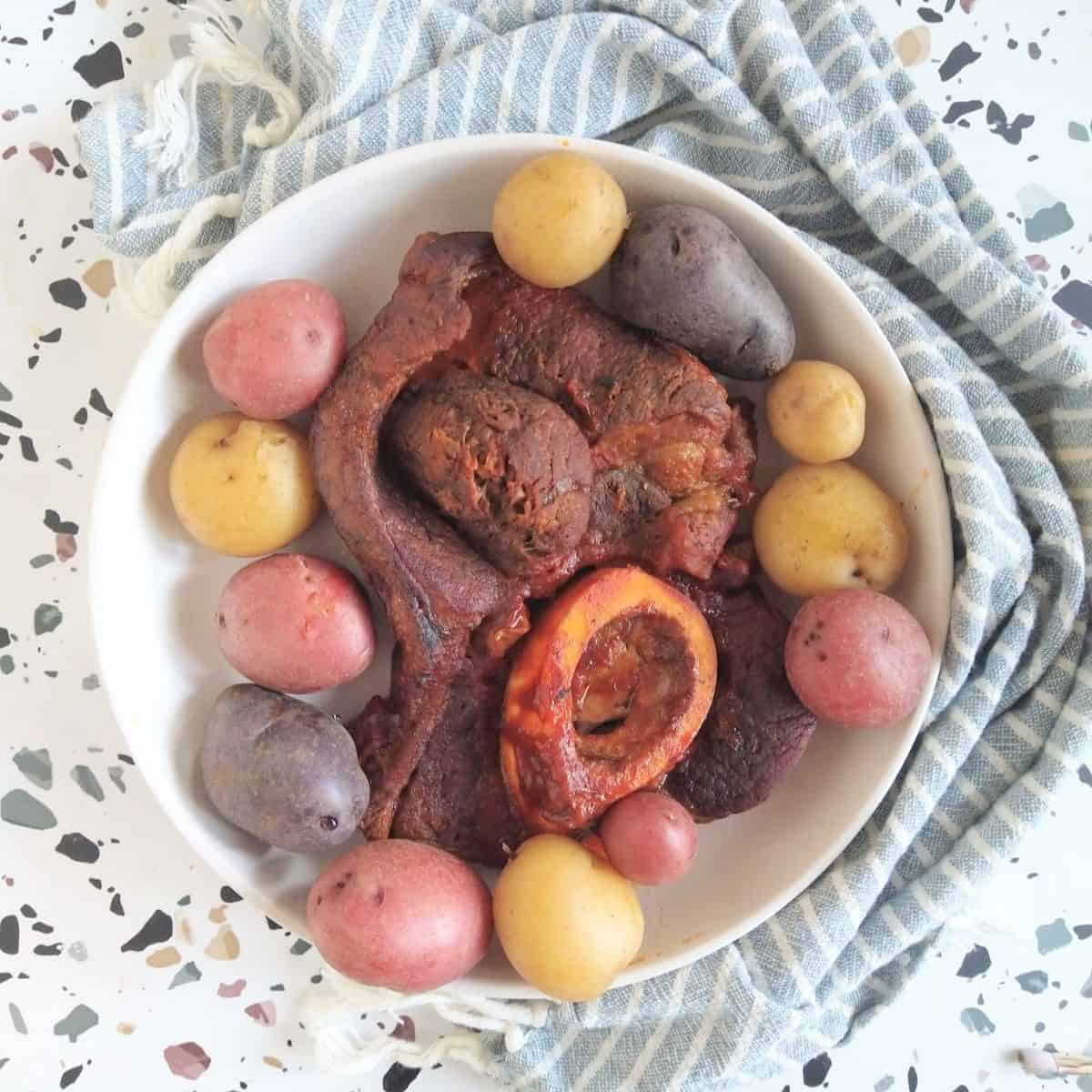
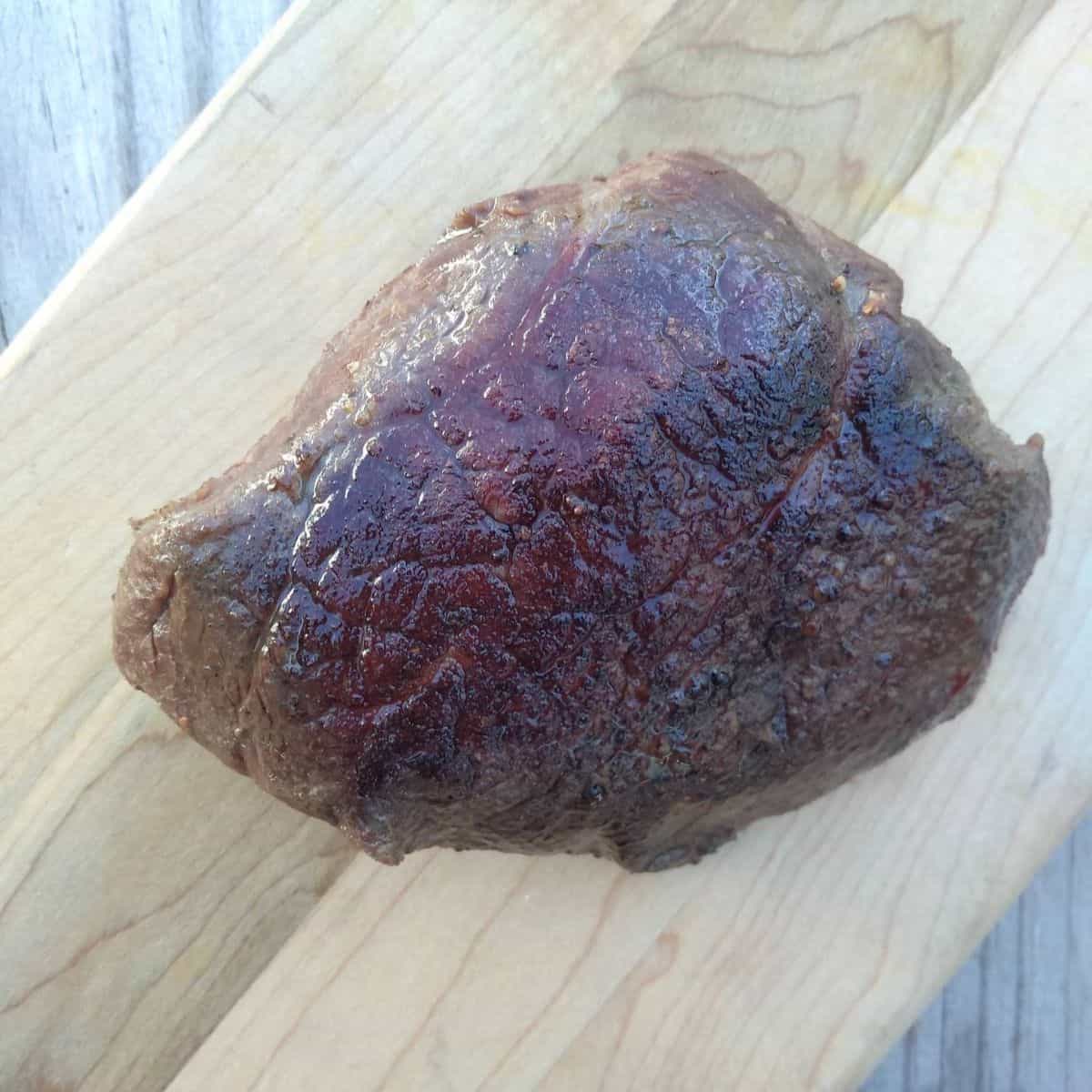
Chuck Arm Steak (Cooked)

So now, next time you see an arm steak in the store you will know what to do with it. It is possible to turn this cheap, tough cut into something to enjoy!

Cattlemans
Click here to see other Michigan grocery stores or markets I have reviewed.

About a month ago, I saw an ad on TV for a place called Cattleman’s. It was a basic, low-budget, no-frills ad, but what got my attention were their great deals on meat. Finally this past Saturday with a cooler in the trunk, I made the 40-minute journey to Cattleman’s on Telegraph Rd in Taylor, Michigan. And I surely was not disappointed. It is not a very large store and is divided into two sections. The section you walk into contains mainly produce, a deli, and some shelves with your pantry staples. The deli had great sale prices (such as salami for $2.99 a pound and turkey for $1.29 a pound). The second section of the store was divided off with a door because the entire meat section is at refrigerator temperature. They had massive shelves of massive cuts of meat, everything from beef tenderloin to short loin to whole New York strip steaks, to all sorts of cuts of pork and chicken. I picked out some beef tenderloin for $4.99 a pound (I made beef tenderloin steaks with this), a whole center cut pork loin for $1.79 (read my post on how I cut up this pork loin), some Italian sausage, and a huge 7-bone chuck eye roast for $1.99 a pound. They have a butcher if you wish to have the big cuts of meat custom cut. They also have meat bundles where you can get a variety of different meats for a great deal (like 43 pounds of different cuts of beef, pork, and chicken for about $90). They are also the only place I have found Frostop Orange & Creme, which is one of the best orange soda pop I have ever had.

I may try to come to this place once month for all of my meat needs for that month. For quality and price, no mega mart can beat them.
For more information and driving directions visit their website: http://cattlemansmeats.com/index.html

Click here to read about my experience there on March 13th, 2010.
Click here to see other Michigan grocery stores or markets I have reviewed.

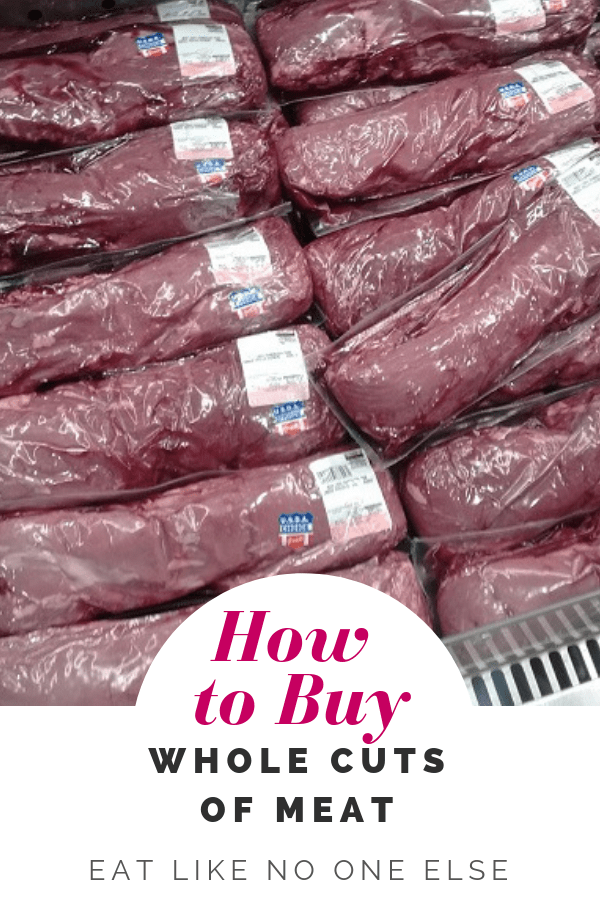
Meat can be one of the most expensive things in one’s food budget every month. But a way to stretch your dollars to the max, is to buy in whole cuts or bulk. This can save you a ton of money. When you buy meat that has been already cut into portions and packaged, you have to pay the person who did this, hence your paying more money for the meat, whether it be beef, chicken, or pork. If you take the time to cut the meat up yourself, then you don’t have to pay someone else to do it for you. One of the best examples of this concept is with beef tenderloin. If you go in and try to buy a filet mignon already cut and packaged for use your going to pay around $12 a pound. If you buy the entire tenderloin and cut it yourself into filet mignon, then you can get the price down to around $4-5 a pound (I just paid $4.99 a pound for a whole tenderloin!) That is a signficant savings and makes something expensive like filet mignon, affordable for the average cook. These savings can also be able with other types of meat: buy a whole chicken and cut it into drumsticks, thights, and breasts yourself. Buy a whole pork loin and cut it into chops and roasts.

A lot of people don’t buy meat whole or in bulk because they say that can’t eat all that meat before it goes bad. Well you don’t have to. Since we have an invention called the freezer, we are able to buy meat now and save it for later. Alton Brown referred to his freezer as a time machine. For example, I bought an entire eye of round and cut it into a roast that I ate that day. Then I cut the rest of the beef into 6 steaks and one month later I was enjoying the last of that purchase. The one thing to keep in mind when freezing meat is that you need to wrap it tightly in heavy duty alunimu foil to prevent freezer burn and then into a good zip top plastic bag to keep you any nasty smells your freezer might dish out.

One more thing I like about buying freezing meat for later is that I have more options on hand at any given time and am not always having to shop for more meat. So I say do your checkbook a favor and buy big!

This is part of a series of posts on tools that have made my life in the kitchen easier and more productive.

Cast Iron cookware isn’t anything new, it’s been around for hundreds of years. The Lodge company, makes of cast iron cookware, have aren’t new either. They have been around since 1896, making them one of the oldest companies in the United States. If you are looking for classic, all-American cast iron cookware that is reliable and won’t empty your wallet, then Lodge is the way to go. But first, why would you even want some cast iron? It’s not easy to clean and if you don’t take care of it, it can rust up on you. Well my reasons are that cast iron is excellent at heat rention as well as diffusing that heat. I can grill a steak on cast iron and have it taste almost like one grilled on a grill. I can cook some soup and it will stay warm in the pot for a long time. I also like cast iron in that I can go from stovetop to oven without a second thought. One more advantage to cast iron is that it actually adds iron to your food which can be beneficial for those that are in need of more iron in their diet.

Below are the pieces of cast iron that I own from the Lodge company:

1. Dutch Oven

I use my dutch oven to make soups, salisbury steaks, and pot roast. I like that I can brown my meat in that same thing that I am going to use to cook it in (save time on washing dishes).

2. Grill Pan

I use my grill pan to grill anything from steaks to chicken, to even asparagus. I also have used my grill pan inside my oven with the broiler setting on to grill up some eye of round steaks (see my post on how to cook an eye of round steak).

3. Griddle

I use my griddle to cook hamburgers, make tortillas, and english muffins. The griddle has really short edges, making it easy to flip what I am cooking with a spatula.

These are only a few of the cast iron products from Lodge. They also make many other type of dutch ovens, different size and shaped grill pans and griddles, skillets of various sizes, and more!

Last time I bought an entire eye of round roast from the supermarket, I divided it into 1 roast (see my post on cooking an eye of round roast), and 6 steaks. I thought that I would need all six steak to perfect my recipe, but the first time was the charm. The problem I faced when cooking these steaks is that they are not the most tender steak on the cow. They come from the round section. It also a pretty lean steak. So overcooking the steak was my number one concern. I decided that I need to cook this thing as fast as possible with as much firepower as possible (at least possible in my kitchen). Here is what I did.

Instructions

First I took two eye of round steak and marinade them in some worchestershire sauce for about 2 hours. Then I remove the steaks from the marinade, patted them dry with a paper towel, added some a couple heavy pinches of kosher salt and let them reach room temperature. As that was going on, I set my oven to broil and placed inside my cast iron grill pan (see picture at the bottom). I felt this was the best way to cook the steak as quickly as I could.

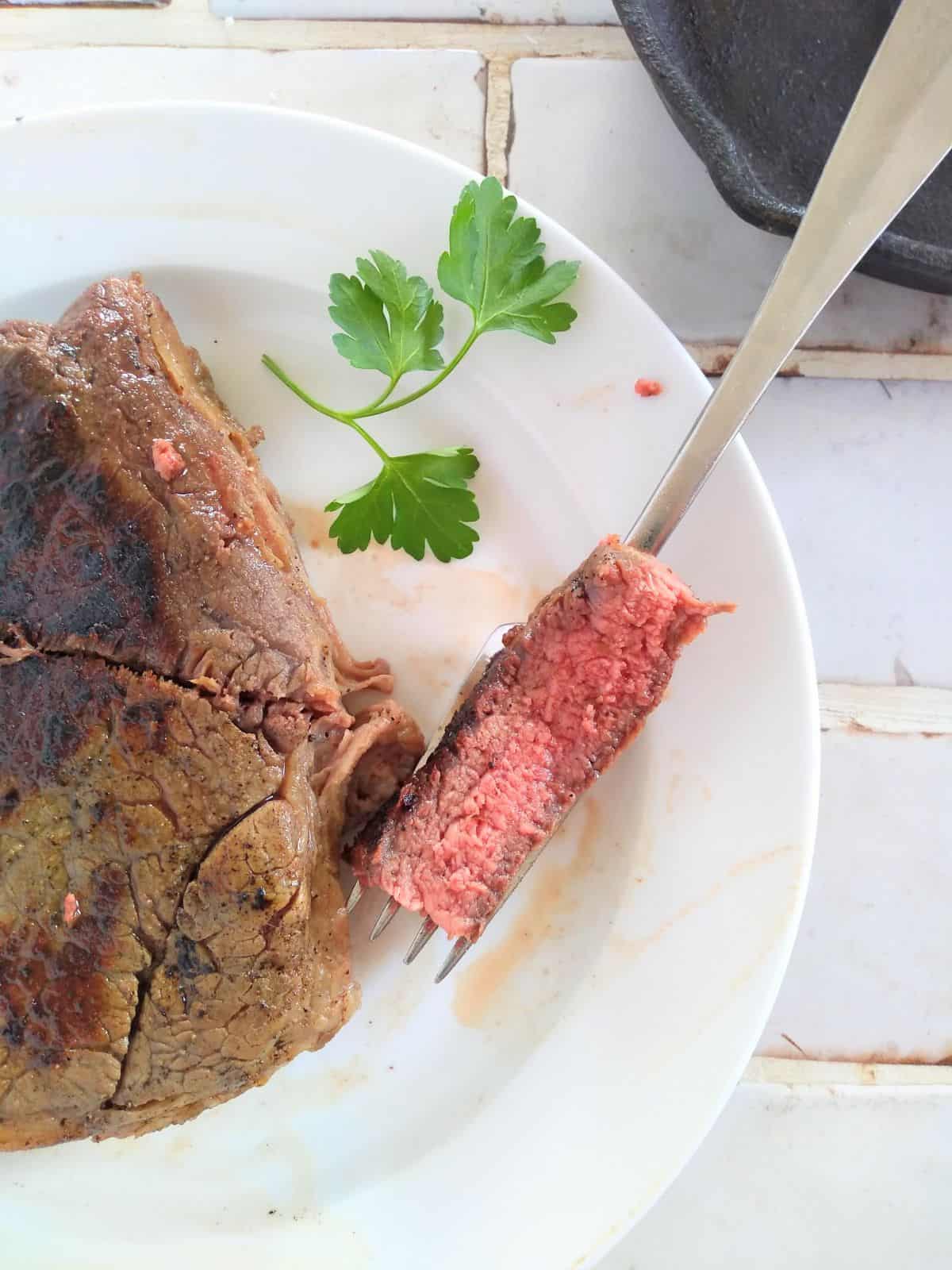
Once the steak was at room temperature and the oven was ready, I placed the steaks on the cast iron grill pan, shut the door, waited for 2 1/2 minutes, flipped the steaks, waited another 2 1/2 minutes and let my meat rest. This resulted in a nice medium steak (anything beyond with this teak would be just too tough). Times will vary with the oven used and the size of the steak. Trial and error is the only real way to figure out what time works best for you (fortunately I didn’t have any error!). You can always use a instant read thermometer to test if your steak is done to your liking.

One last thing: Do your mouth a favor and don’t forget to cut against the grain!