For St. Patrick’s Day this year I wanted to make an authentic Irish dish. Something they would actually eat in Ireland. Sorry to burst your bubble – corned beef and cabbage is Irish-American, but not Irish (learn more: Why Do We Eat Corned Beef on St. Patrick’s Day).

The main reason corned beef became a stable of St. Patrick’s Day was the ease of finding beef and not the more traditional Irish back bacon. But now this piece of meat or something similar to it can be found in grocery stores. Pea meal bacon is a type of bacon cut from boneless pork loin that is cured and rolled in yellow cornmeal (it use to be rolled in dried, ground yellow peas hence the name). I decided to use this piece of meat along with some Irish sausages or bangers to make an authentic Irish dish called a Dublin Coddle.

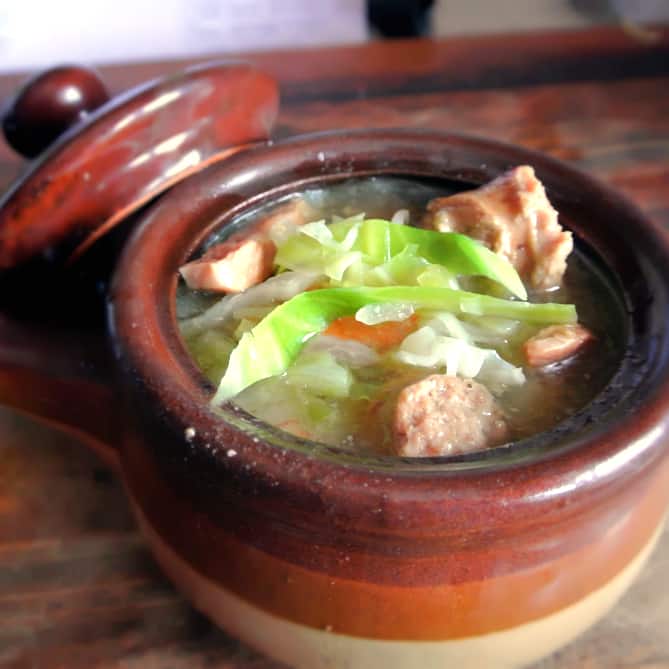
The word Coddle refers to a process of cooking food in a liquid just below a boil – a.k.a simmering. Sausage and bacon rashers along with potatoes and onions are cooked in a broth or stock. I will show you how I made this dish.

Making Vegetable Stock

A Coddle is not meant to be something where a lot of spices and herbs are added. So you need to make all the flavors count. It starts with the cooking liquid. I started off making my own vegetable stock. No recipe here just grab the pot you are going to cook the coddle in and throw in some vegetables. I finished up a bag of carrots I had in the bottom of my fridge along with 4-5 stalks of celery. I then hit the pantry up and found some onions that had no used in a while and were now sprouting quite a bit. Instead of being wasteful I cut the tops off and uses them as green onions. Then I threw in a handful of whole black peppercorn and poured water into the pot to cover all the veggies. The only thing I would have added if I had any one hand were some bay leaves. Then I brought the pot to a boil, then to a simmer with the lid on and cooked for about 90 mintues. Then just strained everything out and my stock was ready for the Coddle.

Irish Sausage (Bangers)

For the sausage portion of this dish I decided to try out the Irish Bangers I found at Trader Joe’s. The package says it contains 5% Rusk. What is the world is rusk (is what I said and you might be saying right now). Rusk is bread crumbs made from unleavened bread. It is suppose to give the sausage a better texture than using regular breadcrumbs as filler. I felt it gave the sausage a pillow-like texture that was very pleasing on the tongue. I browned the sausage in a frying pan before adding it to the Coddle.

Peameal Bacon

I found Peameal bacon at the Hiller’s in Ann Arbor, Michigan for $4.99/pound. I had them cut off for me a 1 pound piece and then I sliced the bacon myself at home. I also browned it in a pan first. It definitely looked a lot like Canadian bacon, esepcially after browning it.

Putting the Dish Together
Before adding the meat to the pot, we sliced it into bite sized pieces. Add some peeled and diced potatoes and carrots. Then salt, pepper, and about an hour of simmering. I decided to add some shredded cabbage that I boiled for a couple minutes. I think this addition is what the dish really needed to be complete. It gave it another layer, another texture to go along with the pillow-like sausage, the firm peameal bacon, the starchy potatoes, and the soft carrots. Everything well balanced and working together. This is why Dublin Coddle is a classic Irish comfort dish, it’s just comforting to eat.

Dublin Coddle
Soup/Stew
Cuisine: Irish
 

Ingredients
  • 1 quart vegetable stock or broth (homemade if possible)
  • 1 lb pea meal bacon, sliced
  • 1 lb Irish style bangers or sausage
  • 3 medium carrots, peeled, cut on the bias
  • 4 Russet potatoes, peeled and diced
  • kosher salt and black pepper to taste
  • cooking oil (I use grape seed)
  • ½ head cabbage, shredded (optional)

Instructions
  1. Bring an oiled frying pan to medium high heat. Add the sausage, Flip until browned on each side. Then add the bacon and brown each side.
  2. Cut the meat into bite sized pieces.
  3. Add the vegetable stock to a large pot along with the meat, carrots, and potatoes. Bring to a boil. Then reduce to a simmer, cover and cook for 1 hour.
  4. Season with kosher salt and black pepper to taste.
  5. Add shredded cabbage when serving (optional)


Share

A wise man once said that “You know, this is a breakfast so good that it’s almost worth making the corned beef and cabbage just for the leftovers.” If you have read this blog before I am sure you should already be jumping to the conclusion that Alton Brown said this and you would be right. My wife is definitely on board with though. She is a huge lover of corned beef hash.

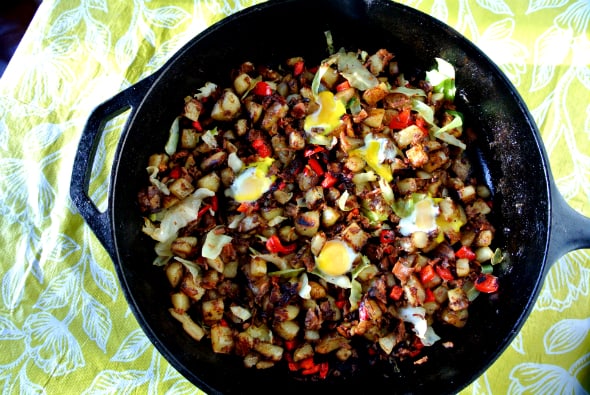
Making corned beef hash is one of those recipes that doesn’t need a recipe. It’s more of following procedure than exact ingredients. You don’t want raw potatoes and burned cabbage in your hash now. I am going to talk about how I put my latest hash dish together.

Cast Iron is the Best Choice for Hash
When making a hash you want the food to brown evenly. The best choice of pan for that is cast iron. It is really good at evenly distributing heat. You will need some fat, I used about 3 tablespoon of grape seed oil but you can also use another cooking oil or butter. Set your heat to medium. High heat will blackened the food before cooking it.

Start with the Potatoes
I started off my hash with cooking the potatoes. If you have leftover potatoes from your St. Patrick’s Day feast then you can use those. But for hash I would prefer cooking the potatoes a fresh. I peeled some Russet potatoes. cubed them and put them in my skillet until cooking through and browned.

Add the Peppers or Other Vegetables
Next I add the peppers. You want to do things in order of how long they take to cook. If I put the peppers in with the uncooked potatoes you will overcook or burn the peppers before the potatoes are done. Plan out ahead of time how long each ingredient should take to cook. Already cooked ingredients can go in at the end. Besides peppers you could also use mushrooms, onions, shallots, garlic, celery, carrots, herbs, etc. With hash the sky is the limit, use what you have on hand.

Season Along the Way
Make sure you are seasoning each ingredient as you add it. This will keep you from over salting in the end or at the table.

Adding the Corned Beef and Leftovers
Once all the raw ingredients have been cooking I add in my leftover corned beef and cabbage. Mix in thoroughly to combine.

Adding a Weight
In order to get that nicely browned hash you want you need to weight down the hash. I use my cast iron dutch oven on top of the skillet. It mushes everything down and helps that even browning. Make sure you oil up whatever you uses a weight or a good portion of your hash might end up attached to the bottom of your weight.

Adding Eggs
A nice addition to a hash is some cooked eggs. I got this idea from Giada and her salami & spinach hash. You just break some eggs directly onto the hash and cover with a little until the eggs are cooked. We had some quail eggs that we were given so we decided to use those.

Hash making is not like baking. It’s not a science. It about using leftovers to create a new, fresh meal. Hopefully with the tips your read about today you will be prepared to use this dish with your leftovers.

Share

What Can I Make with Leftover Corned Beef Besides Hash?
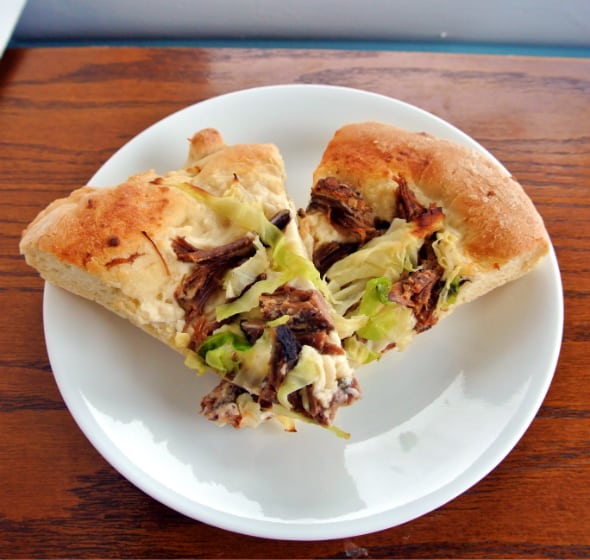
This year I decided to cook my corned beef and cabbage a week before St. Patrick’s Day, so I could come up with some leftover recipes for my readers. I wanted something unique. Hash is good and all (I will be covering that later this week). I looked at some possible ideas online. The one that inspired me the most was pizza. It would be easy to throw my leftovers as topping onto a pizza – creating a hand held corned beef meal.

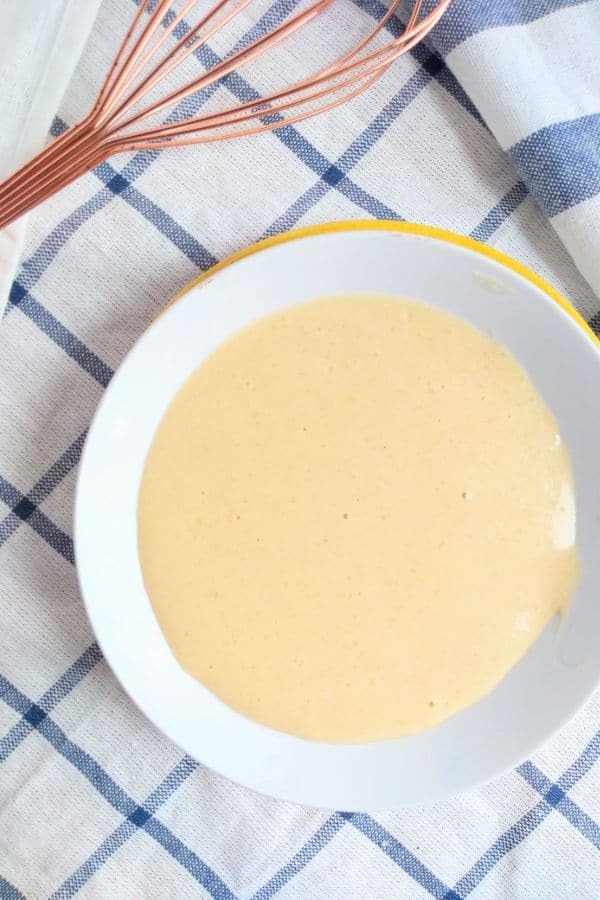
The next thing I had to address before I could put this pizza together was the sauce. Tomato sauce didn’t seem like the right choice. I remember Giade de Laurentitis making a Béchamel sauce for a meatball pizza. A Bechamel is a simple white sauce made with flour, butter, milk, and some seasonings. Since I didn’t plan on adding cheese to this pizza, a nice Bechamel seemed just right. Yes I said I made a pizza without cheese. I know it sounds sacrilegious.  If you must have some cheese you can also grate on some Parmesan at the end. To spice up the Bechamel I added some garlic, nutmeg, and white pepper. The nutmeg adds a surprise bite of spice that will leave people wondering what that is. I like white pepper in this case so I don’t have little flecks of black in my creamy white sauce.

For the pizza dough I used a recipe by Paula Dean that makes enough dough for two pizzas. I made a traditional pepperoni pizza for the kids since I didn’t think they would go for my “crazy” pizza.

Corned Beef & Cabbage Pizza
 

Ingredients
  • Your favorite pizza dough recipe
  • Leftover corned beef and cabbage
  • 2 tablespoons butter
  • 2 tablespoons all-purpose flour
  • 1 cup milk
  • ⅛ teaspoon freshly grated nutmeg
  • ¼ teaspoon white pepper
  • ¼ teaspoon kosher salt
  • 1 cloves garlic, minced

Instructions
  1. Melt the butter in a non-stick pan over medium high heat.
  2. Mix in the flour and cook for about 1 minute
  3. Add the milk, nutmeg, white pepper, salt, and garlic.
  4. Stir until the mixture has become the consistency of tomato sauce
  5. Remove from heat.
  6. Spread the sauce onto your dough. Add your corned beef and cabbage.
  7. Set your oven to the highest temperature it will go without burning your house down (500 degrees to me).
  8. Bake until the crust has browned around the edges. About 15 minutes in my oven.
  9. Allow to cool for at least 5 minutes before slicing.


Share

Corned beef, cabbage, and potatoes – the three things to have on your table for an American Irish St. Patrick’s Day. Here at Eat Like No One Else, we don’t want to just cook these three things like everyone else. I wanted to change up the meal to be delicious and more gourmet like. So I opted for dry brining and dry aging my corn beef (learn how) serving that over boxty cakes (potato pancakes), and shredded cabbage on top. Now this would have been great on it’s own but I wanted to take it over the top. A friend commented on my facebook page that she uses spicy mustard with her corned beef. That got me thinking I wanted to incorporate mustard in more than just the dry brine for beef. At the last minute, my wife and I came up with the idea to make a creamy mustard sauce to serve on top and that’s what really made this dish the best corned beef and cabbage dish I ever had.

Below you will find a few notes and then the recipe for each component that you can easily print out.

Cooking the Corned Beef
I simply added enough water to cover my brined corned beef in my dutch oven. Added 1 carrot and 1 stalk of celery and brought to a boil, then simmered for 3 hours until the brisket was fork tender. Because of the brine I used it made for an amazing cooking liquid that I used in my mustard sauce and I will use for soup later.

Making the Mustard Sauce
This sauce comes together really fast and is really tasty. I make it in a non-stick frying pan. You just make a roux, add two types of mustard to it along with some milk or cream and some of the cooking liquid.

Making the Boxty Cakes
I cooked the Boxty cakes on my electric griddle. It gives you a wide space to work with and you can cook several at a time. The recipe calls for leftover mashed potatoes, so I just used the leftover Colcannon I already had in the fridge.

Cooking the Cabbage
The key to cooking the cabbage is to use a lot of water in a big pot along with some salt and sugar. You only need to boil it for a couple minutes, so that the cabbage is tender without mush. I never cook cabbage along with corned beef. It just ends up disgusting the way. I think that’s why a lot of people don’t like cabbage.

Corned Beef & Cabbage with Boxty Cakes and Mustard Sauce
 

Ingredients
For the corned beef
  • 3-4 lbs brined or pickled corned beef
  • 1 large carrot
  • 1 celery stalk
For the cabbage
  • 1 medium head cabbage
  • 1 tablespoon kosher salt
  • 1 tablespoon sugar
For the boxty cakes
  • 1 cup seasoned leftover mashed potatoes
  • 1 cup peeled and grated raw Russet potatoes
  • 2 cups all-purpose flour
  • ½ teaspoon kosher salt
  • 1½ cups buttermilk
For the mustard sauce
  • 2 tablespoons butter
  • 2 tablespoons all-purpose flour or potato startch
  • 1 tablespoon dijon mustard
  • 1 tablespoon whole grain, yellow, brown, or spicy mustard (your choice)
  • ½ cup milk or cream
  • ½ cup corned beef cooking liquid or beef broth

Instructions
To make the corned beef
  1. Place corn beef in a dutch oven or large pot. Fill with enough water to just cover.
  2. Break the carrots and celery into large chunks and add to the pot.
  3. Bring to a boil. Reduce heat to simmer. Cover and cook for at least 3 hours or until the meat is fork tender.
To make the boxty cakes
  1. Combine the mashed and raw potatoes in a mixing bowl. Mix well to combine.
  2. In a second bowl combine the flour, baking powder, baking soda, and salt.
  3. Add the flour mixture to the potatoes and mix to combine.
  4. Stir in the buttermilk. Add additional milk 1 tablespoon at a time if batter seems to thick, but it should be one the thicker side.
  5. Heat your griddle up to it’s highest temperature.
  6. Using a ladle to drop the batter onto the griddle. Cook for about 4 minutes per side until brown.
  7. You can place them in a oven set to it’s lowest temperature to keep them warm.
To make the cabbage
  1. Cut the cabbage in half and shred each half
  2. Bring a large pot of water to a boil. Add the salt and sugar.
  3. Then add the cabbage.
  4. Cook for 2-3 minutes until the cabbage is tender.
To make the mustard sauce
  1. Melt the butter in a frying pan over medium-high heat.
  2. Once it has fully melted add the flour.
  3. Stir with a wooden spoon to combine and cook for about 1 minute.
  4. Add the milk, mustards, and cooking liquid.
  5. Bring to a simmer, stirring constantly.
  6. Simmer until desire consistency, shouldn’t be more than a couple minutes
  7. Serve immediately.


Serving Instructions
When it comes time for serving. I place 1 boxty cake on a plate, then add the corned beef and drizzle on the mustard sauce. Serve the cabbage on the side or you can place it right on top just as you would a last minute herb.

Share

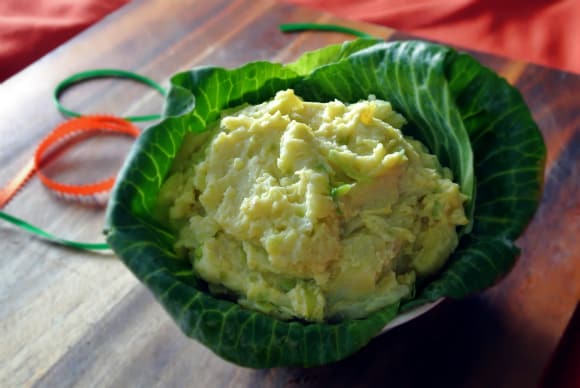
When people are trying to come up with traditional dishes to cook for holidays it can be overwhelming. A lot of dishes are complicated – difficult to pull off with feeling like you shamed an entire nation. Some have you on an ingredient hunt that takes you to a part of town that you never knew exist (and wish it had stayed that way!). Good news if you are looking for a St. Patrick’s Day food that is traditional and easy to make, then you have arrived at the right place. Colcannon is a simple side dish to make that if you already know how to prepare mashed potatoes then you are already half way there.

To make a good Colcannon I start with these 3 simple ingredients:

Yukon Gold Potatoes
I think Yukon Gold potatoes make for the best Colcannon. They have a rich, buttery flavor and a medium starch level. Normally when I mash up some Yukon I leave the skin on and I did in this case. However for the final dish, I felt the skins along with the additional of our green vegetation would be too much, so the potatoes took a journey through the food mill. The food mill saves me the trouble of peeling the potatoes and it has gives them a pleasingly smooth texture.

Adding Buttermilk
After the potatoes have done there the thing in the food mill, I add a bit of buttermilk to them. The creaminess and the tang the buttermilk brings to the table is a wonderful flavor addition that you should definitely use even if you normally don’t buy buttermilk.

Preparing the Cabbage
The cabbage is best prepared separately. It only needs a few minutes to cook in boiling water with some sugar and salt. I still want the cabbage to be something you need to bite into, not a slimy mess. Before cooking, we shred the cabbage. Here is a very rough video of my wife doing so (after she cut it in half and with the kids talking in the background):

Simple ingredients. Simple flavors. But when they work together they are oh so good!

My Best Irish Colcannon
Side Dish
Cuisine: Irish
 

Ingredients
  • 3 pounds Yukon Gold potatoes
  • ¼ cup buttermilk
  • ½ medium sized head of cabbage
  • 4 tablespoons butter, room temperature
  • 1 tablespoon sugar
  • kosher salt
  • freshly ground white pepper

Instructions
For the potatoes
  1. Chop the potatoes into small equal sized pieces. Note: Don’t peel them unless you don’t own a food mill.
  2. Put in a pot and add enough water to cover.
  3. Bring to a boil, then simmer until soft.
  4. Process the potatoes through a food mill (if you have one) otherwise mash them with a potato masher.
  5. Add about ¼ cup of buttermilk and 4 tablespoons of butter. Mix to combine.
  6. Season with kosher salt and white pepper to taste.
For the cabbage
  1. Shred the cabbage. Then wash and drain it in the sink.
  2. Bring a large pot to a boil with 1 tablespoon of salt and 1 tablespoon of sugar.
  3. Add the cabbage.
  4. Boil for 2-3 mintues until the cabbage has soften but is not mushy.
  5. Drain the cabbage and then mix into the prepared potatoes.

Notes
I call for white pepper in this recipe for 2 reasons: 1) white pepper won’t stand out in appearance like black pepper 2) The milder flavor of white pepper doesn’t overwhelm the rest of the dish


Share

We are all guilty of it. You know what I am talking about. How often have you slaved over a hot stove to produce a beautiful roast or perfectly grilled piece of chicken, and at the end just threw some tasteless frozen vegetables in the microwave. I think a meal can’t be out of this world without good sides that are plate pleasers. Sometimes it’s hard to have time to make good sides, as you spend so much time working on that main course. I have a side dish that is really easy to make, doesn’t take long, and it packs a ton of flavor. And yeah and it involves bacon fat!

Ingredients
1/3 of a head of cabbage, shredded
2 tablespoons of bacon fat
a pinch of ground mustard
kosher salt and black pepper to taste

Instructions
Unless you have a large family, a head of cabbage can be too much for one meal. That is why I only use about 1/3 of a head for this recipe. Cabbage is really best the first time, reheating it in the microwave makes it too soft. Start by shredding the cabbage. If you don’t know how I posted a video below. In a large non stick frying pan, heat up 2 tablespoons of bacon fat over medium heat. I used bacon fat that I collected from cooking Nueske’s Wild Cherrywood Smoked Bacon, which is some of the best bacon I ever had. You want to get your fat from a nice smoky bacon. This will give the cabbage a great smoky flavor.

Once your bacon fat is melted, add the shredded cabbage. Stir the cabbage often so that it doesn’t burn, but some browning is definitely nice. I like to add a pinch of ground mustard.

Cook the cabbage has softened but still has some bite to it, around 5-8 minutes. Add salt or black pepper to taste. The bacon fat might should have enough salt in it, so that you don’t need anymore.

How to Shred Cabbage

Share

If you live in one of the more northern climates, you might want to get a jump on the growing season. I live in Michigan. I try to plant as soon as possible. This year, since the winter was mild, the ground never really froze. We had an early start to spring like temperatures. The next 10 days it’s not even predicted to fall below freezing at night. So I am ready to garden. But still wanted to give my seeds the best chance. To do this I decided to help warm up the soil a bit. The easy way to do it – black garbage bags. By laying down black bags on top of my soil, I am drawing in heat, and this will help give the soil temperature an additional boost. It is also good for keeping weeds at bay before you are ready to plant.

The day I put them down it was really windy, which was good because I got to test what would keep the bags from flying away. I am lucky that I have a lot of bricks and stones on my yard left behind by a former tenant. I just put a stone at each corner.

Why Garbage Bags?
They are cheap. It’s a lot quicker than having a roll of black plastic, which you are going to have to cut. The beauty of the garbage bag is you can remove them one at a time. Say you only want to plant in one spot, you can just remove the bag(s) from that spot.

How Long Do I Need to Have the Bags Down For?
I would say as long as you can. As long as you don’t think it’s really going to snow a lot again, I would put them down ASAP. Then when you are ready you can remove them.

What About Drainage?
You should poke some holes into your bags, so that water can drain down into your soil.

When Will It Not Be Necessary?
Once you pass the frost free date in your area, then I wouldn’t bother putting them down anymore, your soil should be ready. I am most using them for early crops, like peas, broccoli, lettuce, and cabbage.

Share